
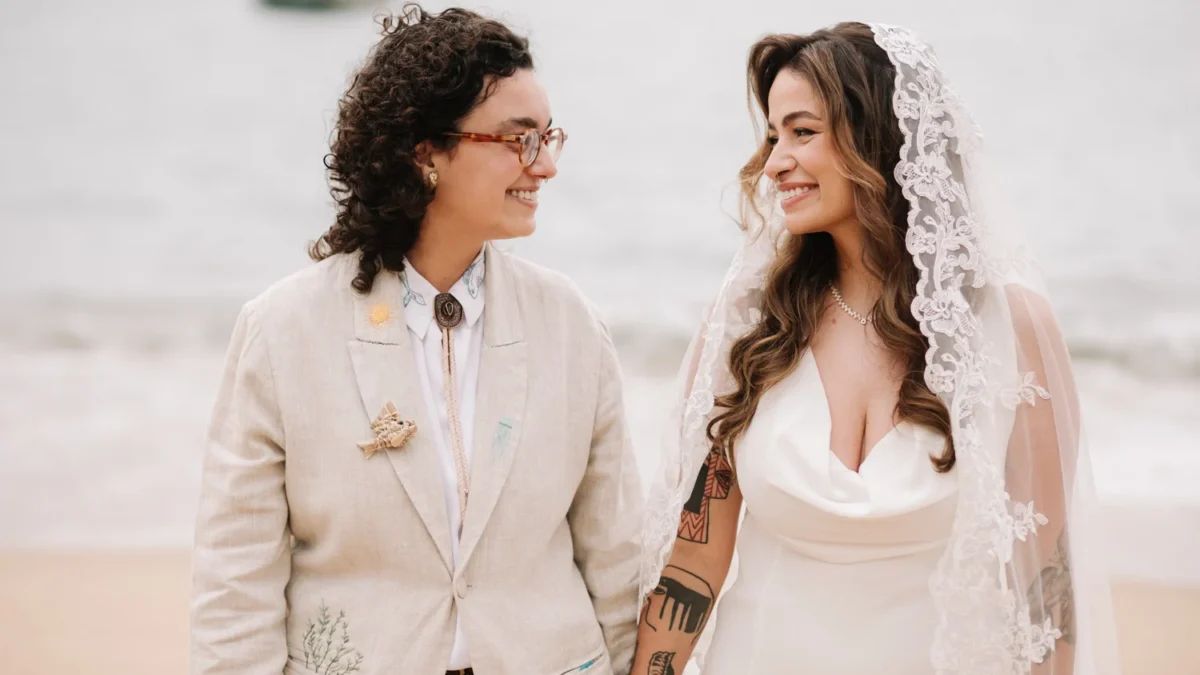
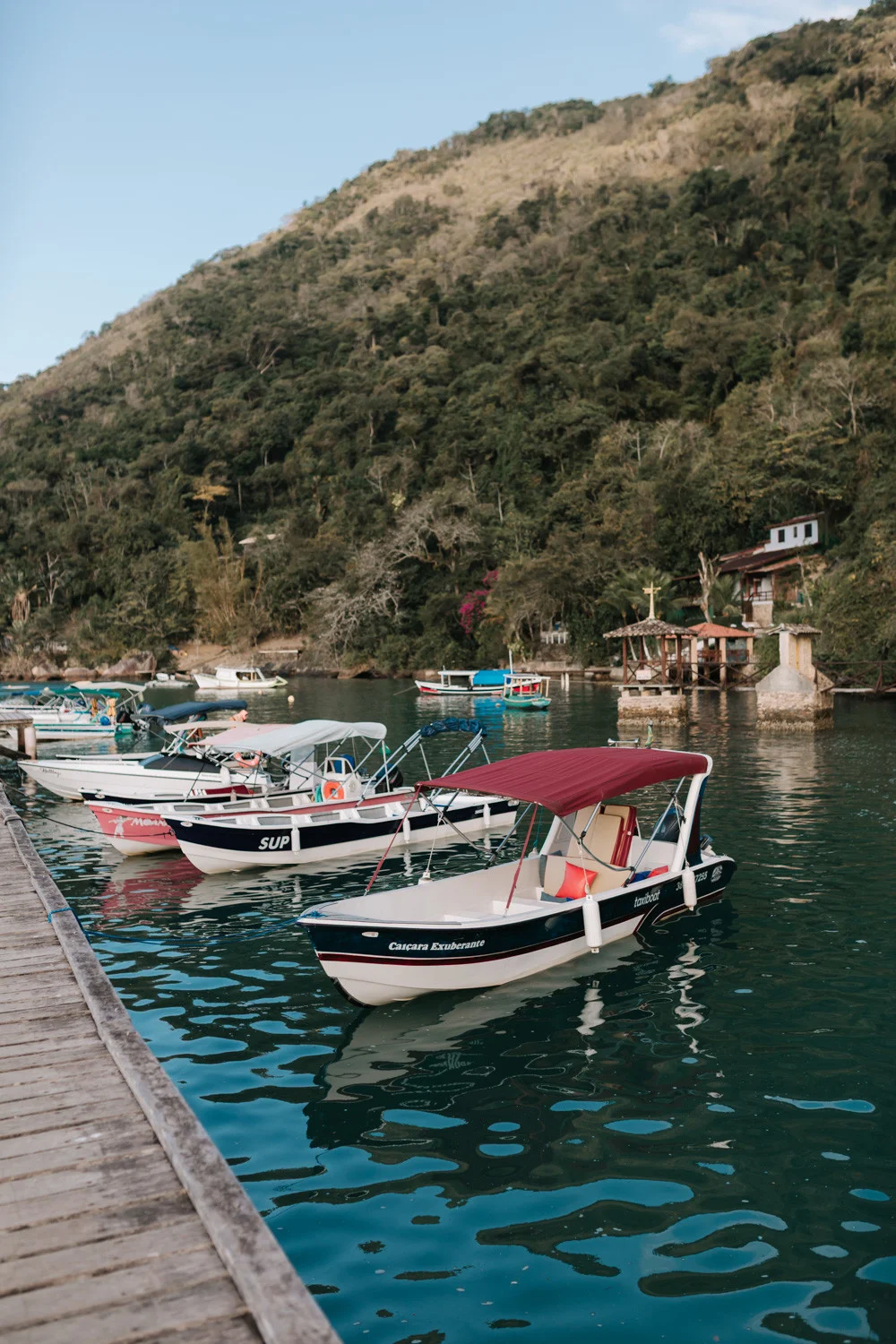
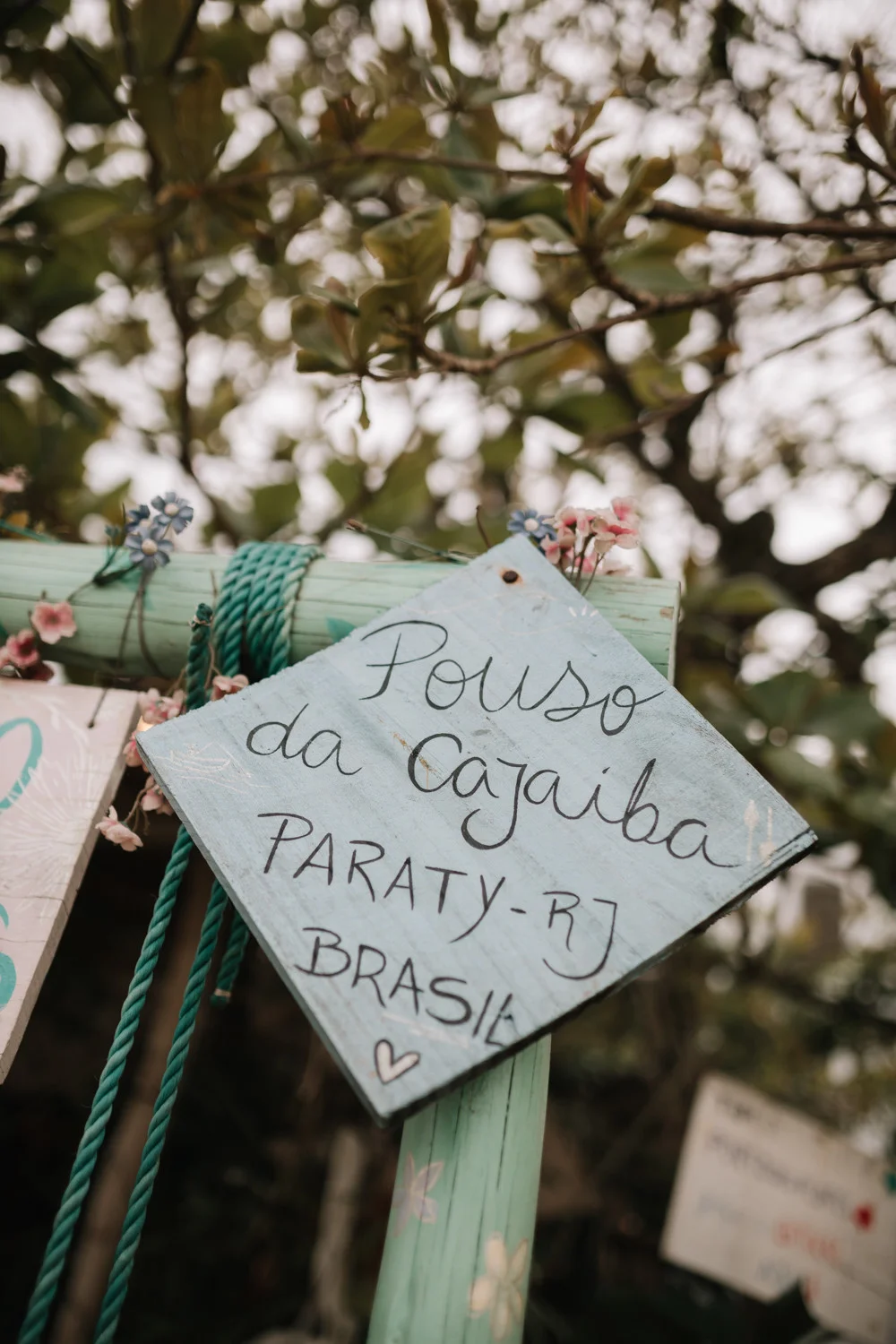
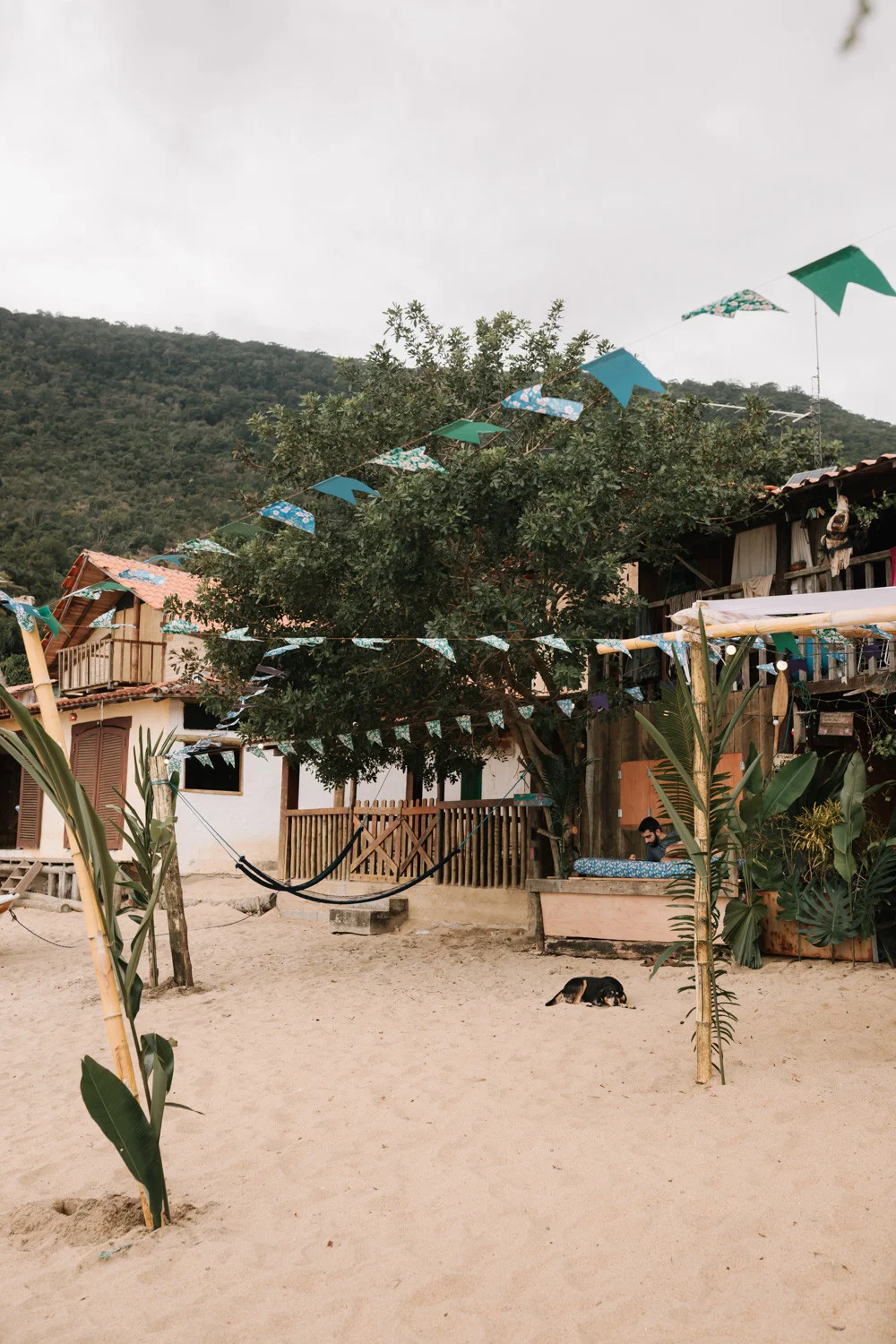
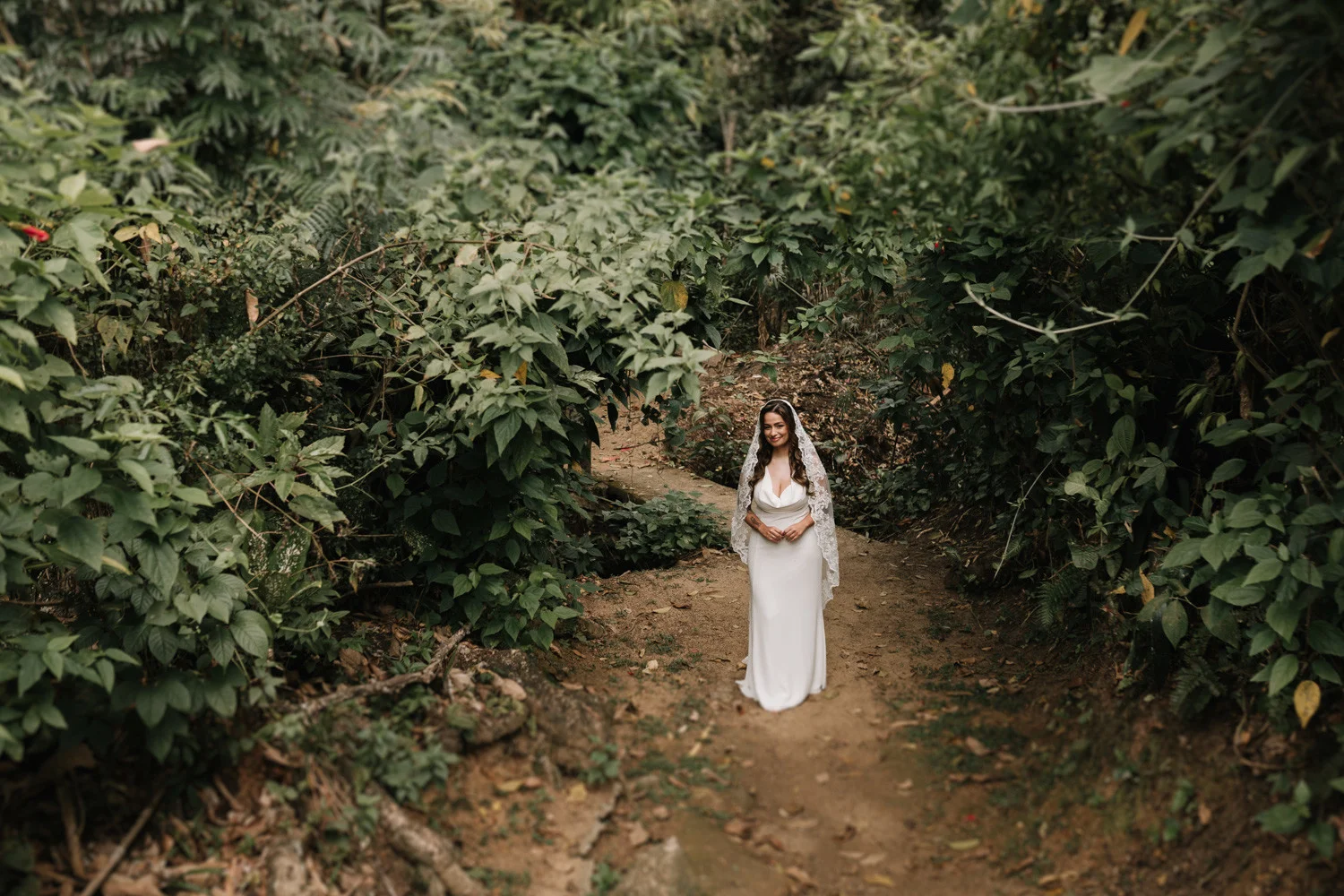
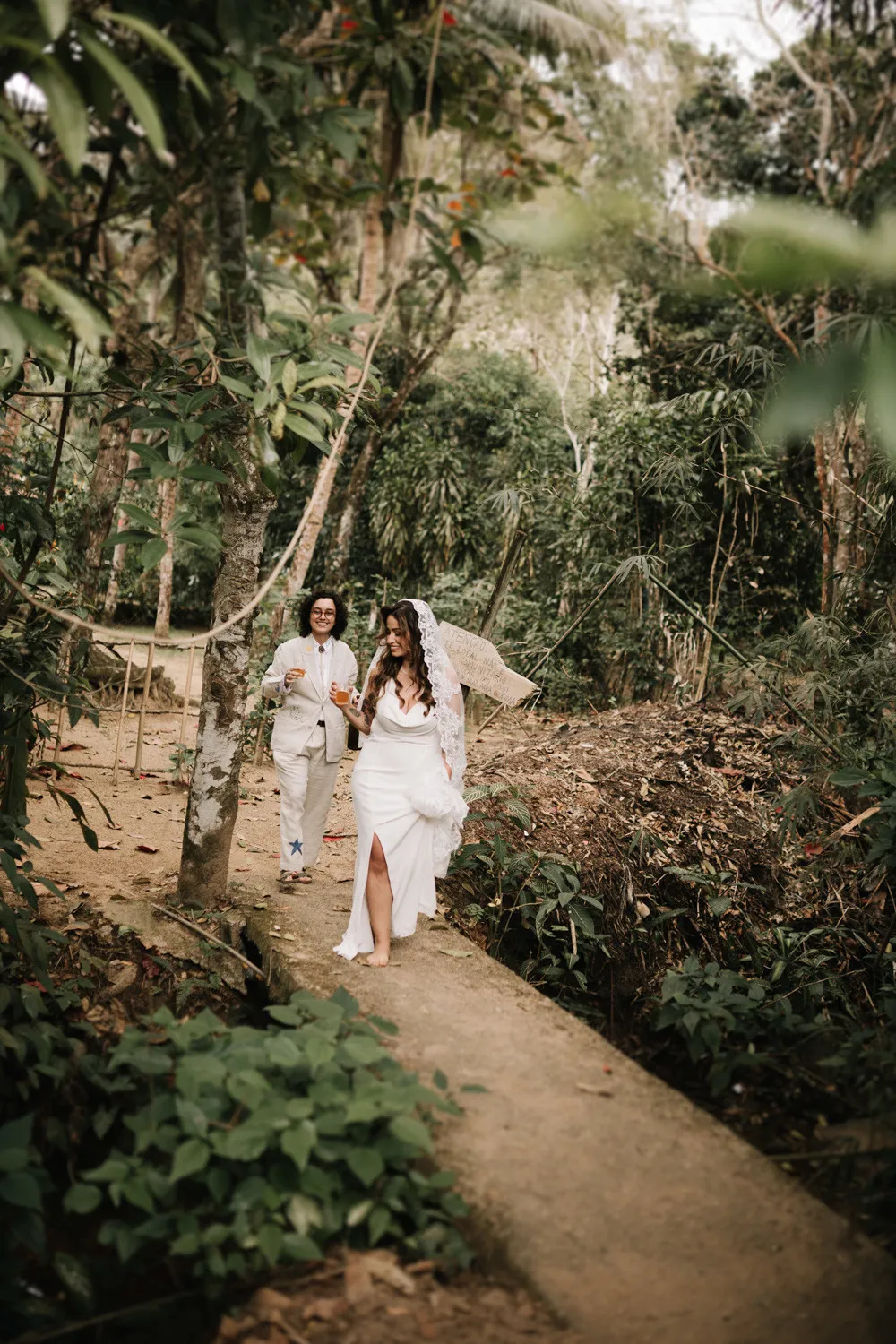
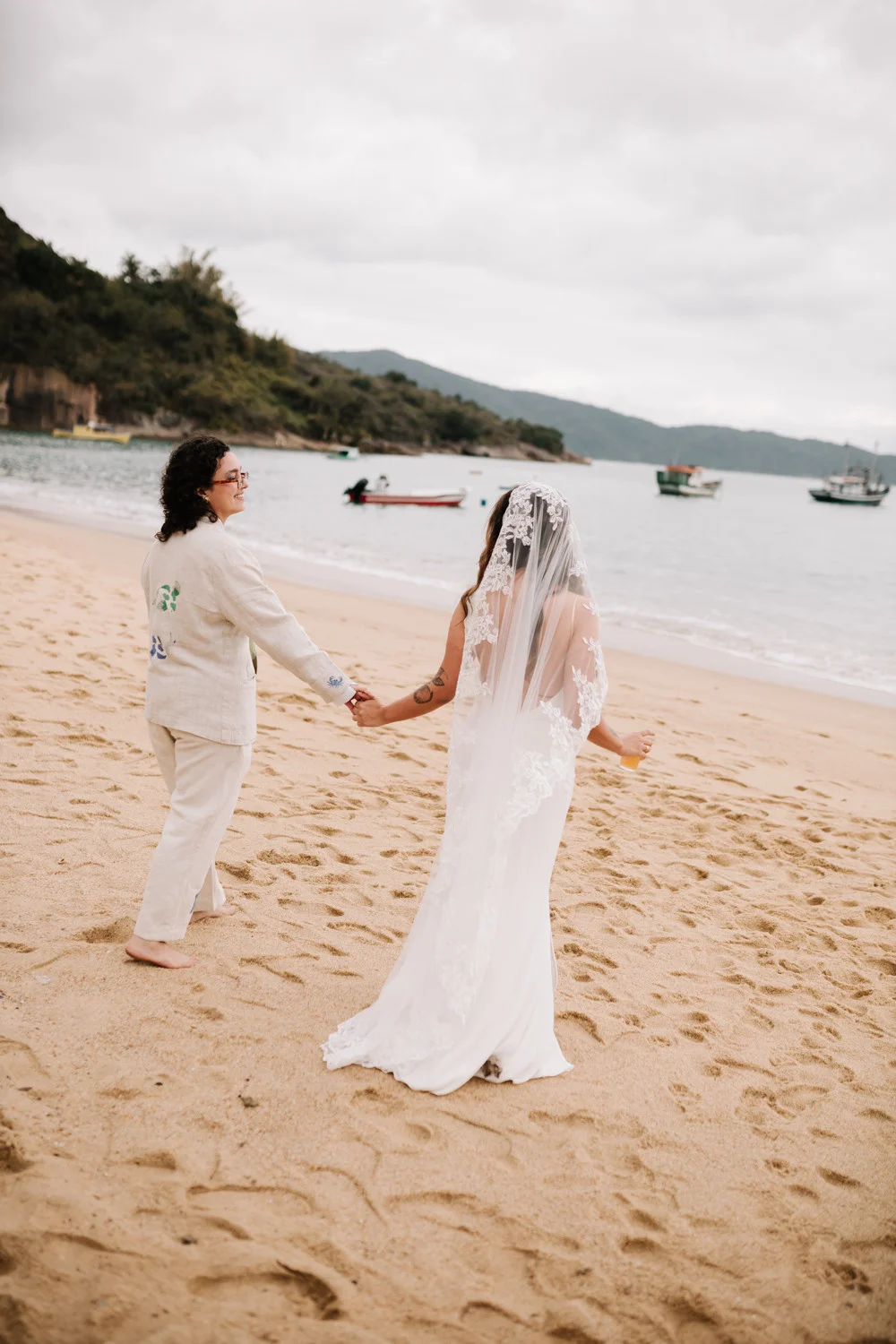
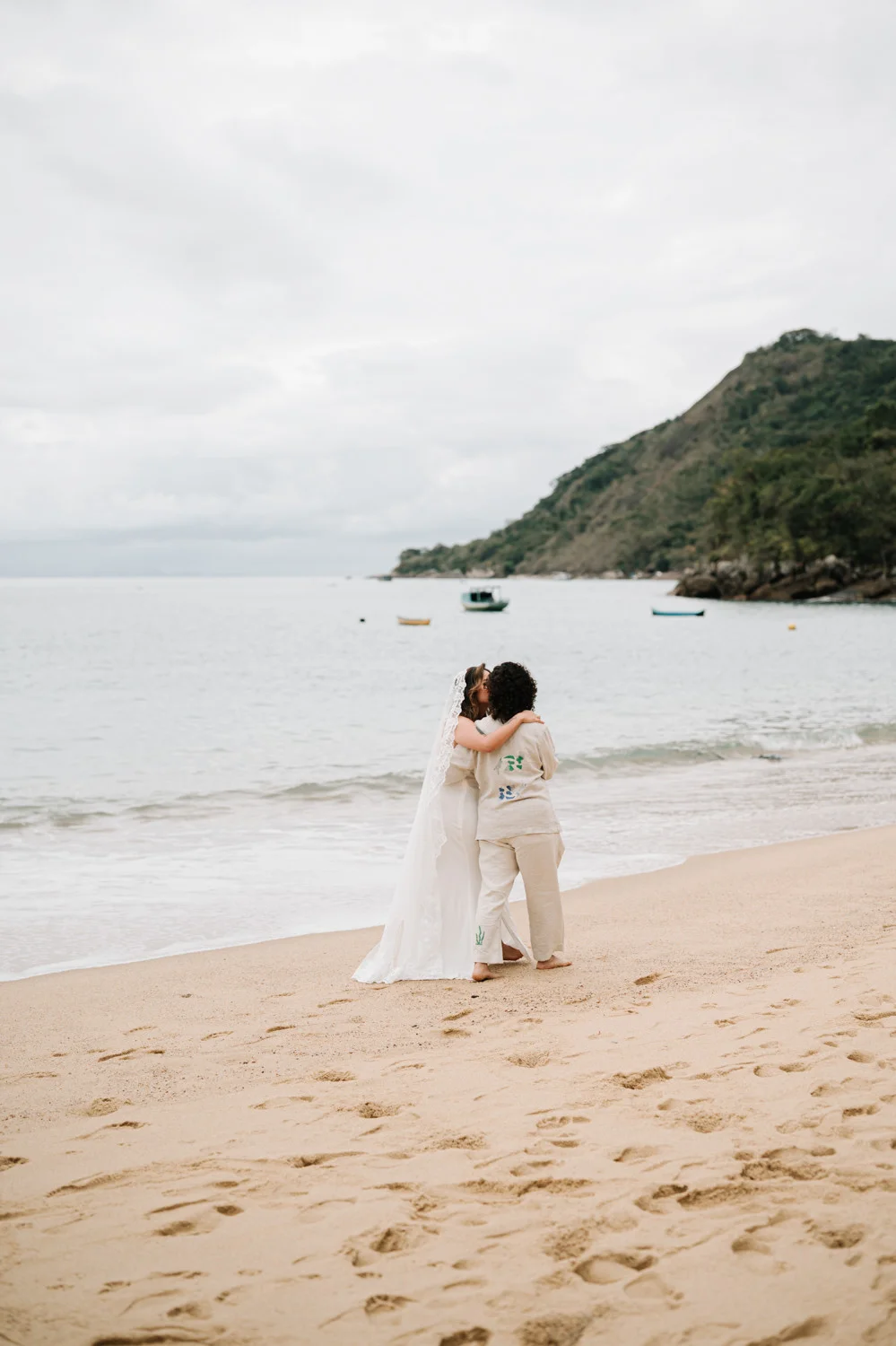
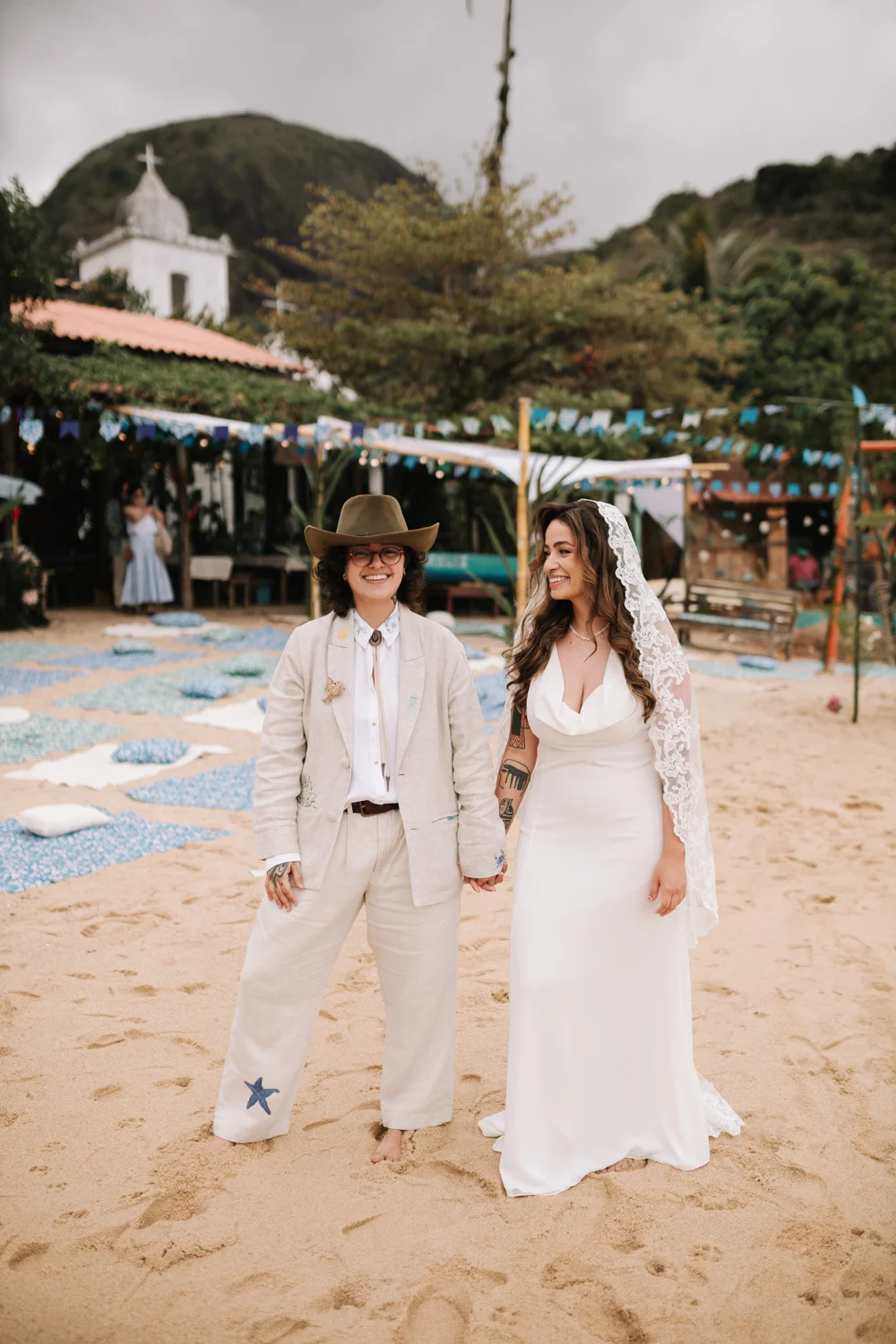
To reach the ceremony, guests boarded boats. There was no other way in. Rafaela, a pansexual bride, and Nathalia, a pansexual nonbinary broom, married on Sept. 13, 2025, at Pouso das Flores, a remote caiçara community along the coast of Paraty, Rio de Janeiro, accessible only by water. The couple lives in Paraty, and the choice of venue was less a logistical decision than an honest one: this is where and how they actually live.
Arriving From the Sea
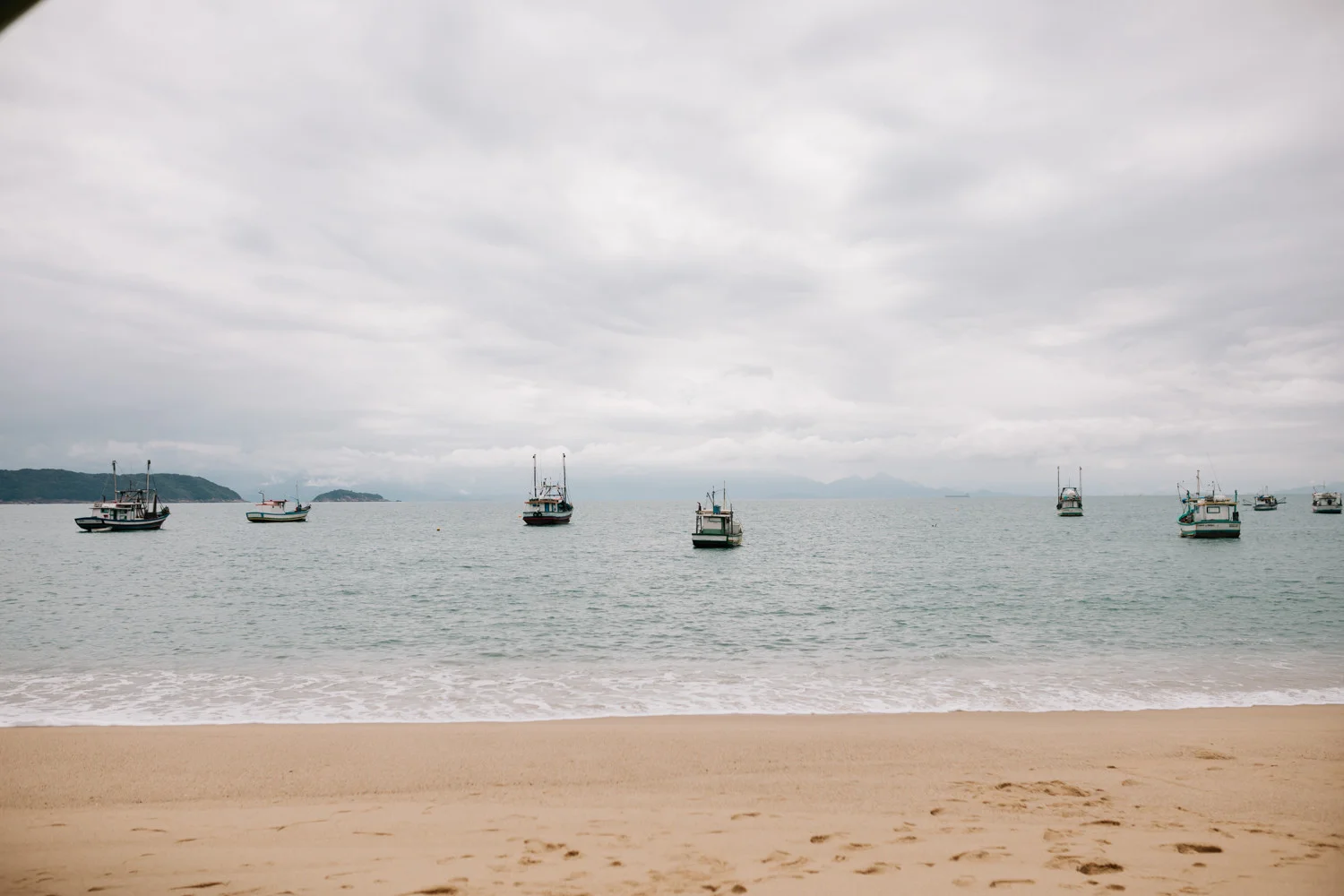
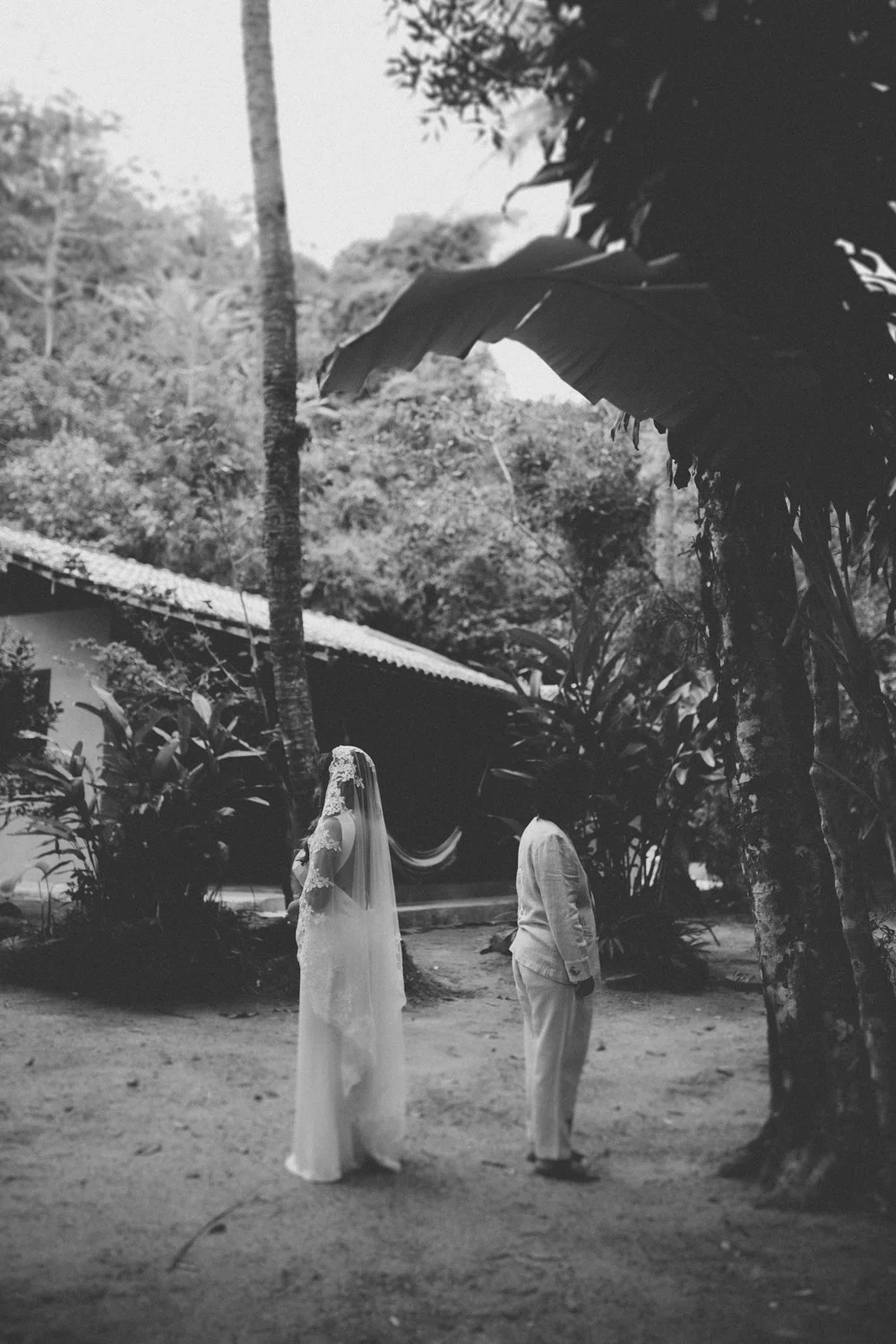
Rafaela and Nathalia did not walk down an aisle. Instead, each arrived by boat from a different direction, accompanied by their families, and met for the first time that day at the ceremony space by the sea. The geometry of it, two vessels converging on the same shoreline, carried its own quiet logic. Nothing about the moment required explanation.
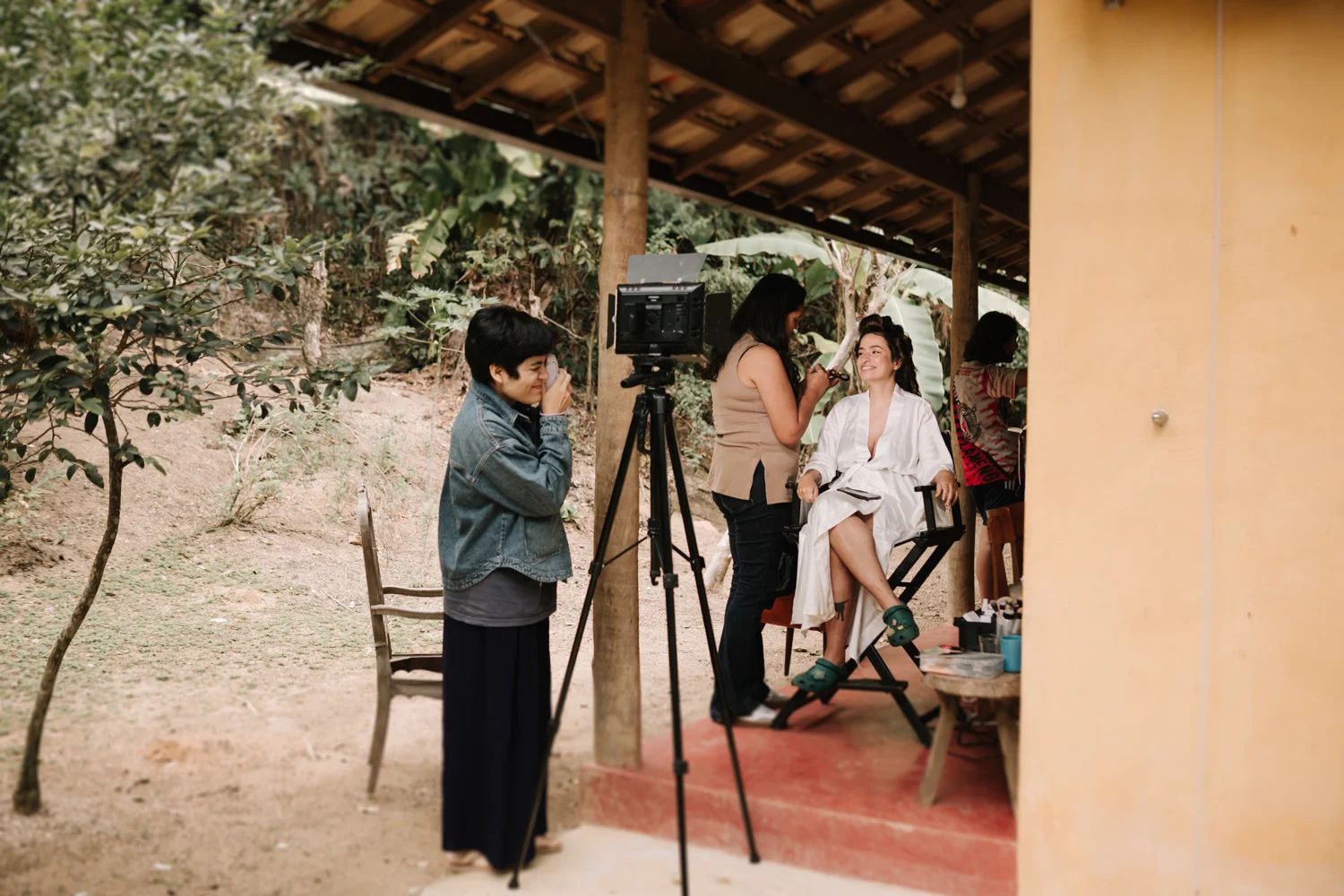
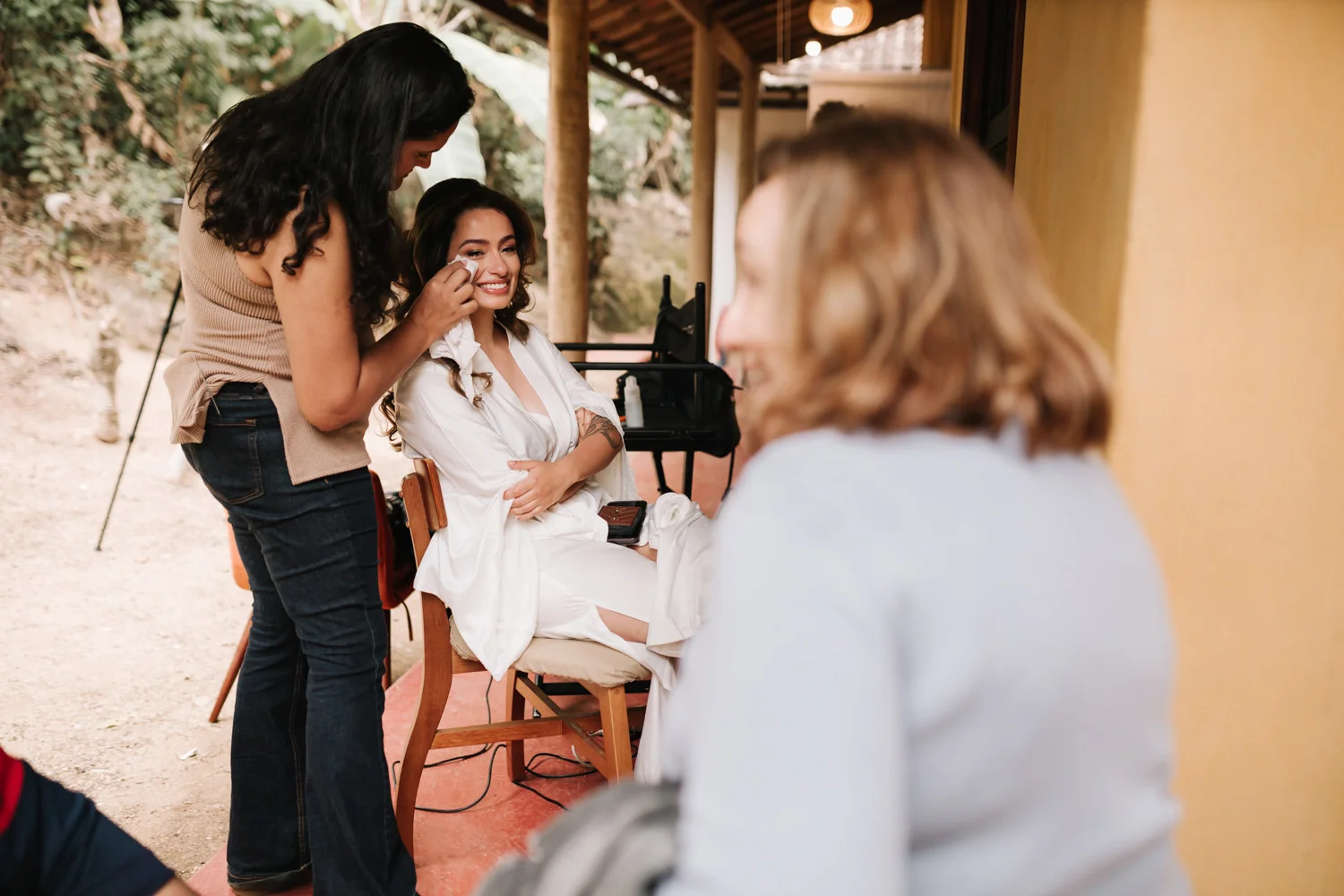
They had spent the morning apart, getting ready separately before their first look, which meant that when they finally saw each other at the water’s edge, the anticipation had been building since sunrise. Catharine Sant’Ana, the photographer behind Alma Afetiva photography, documented the full arc of the day, from those private morning hours to the moment the boats touched land.
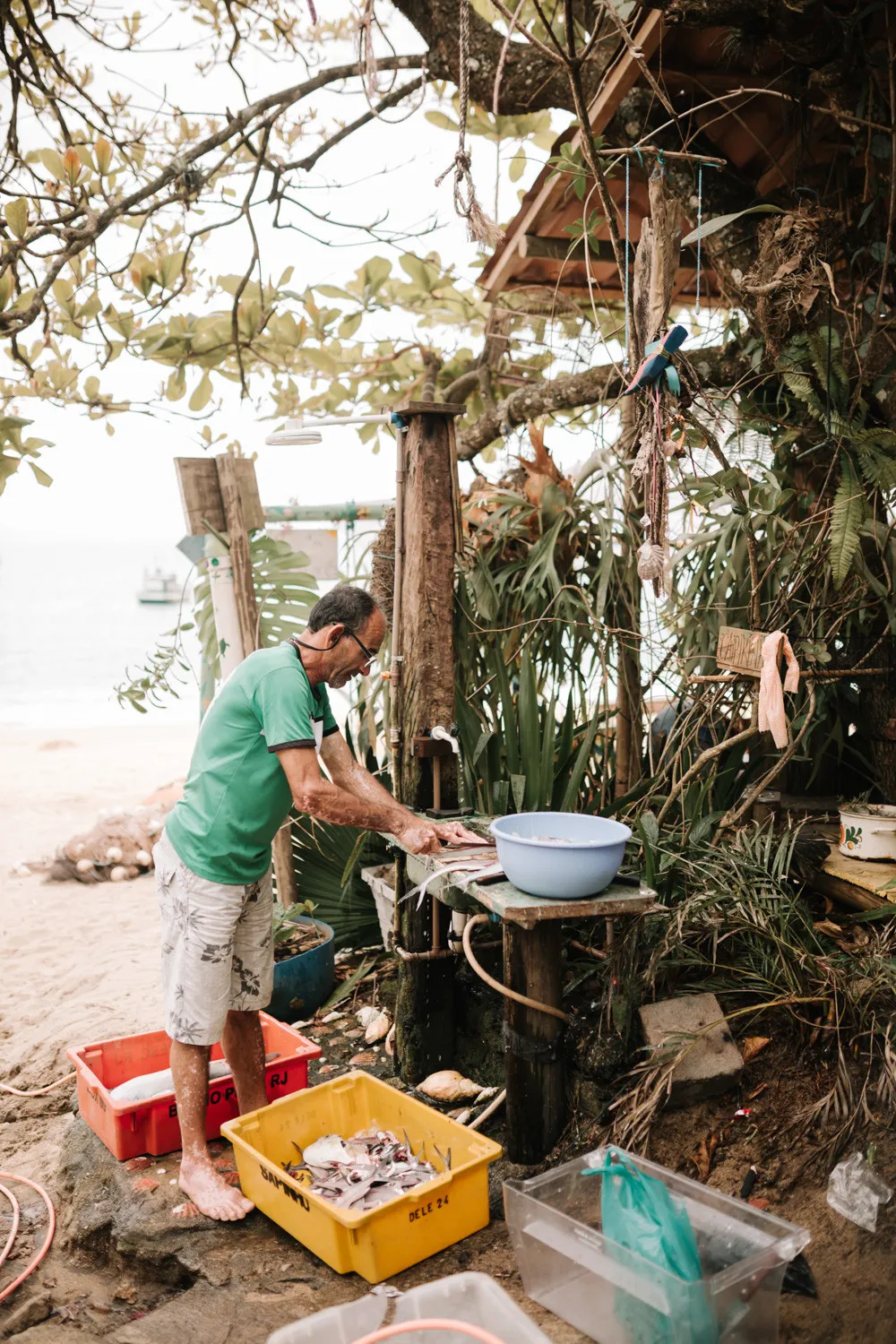
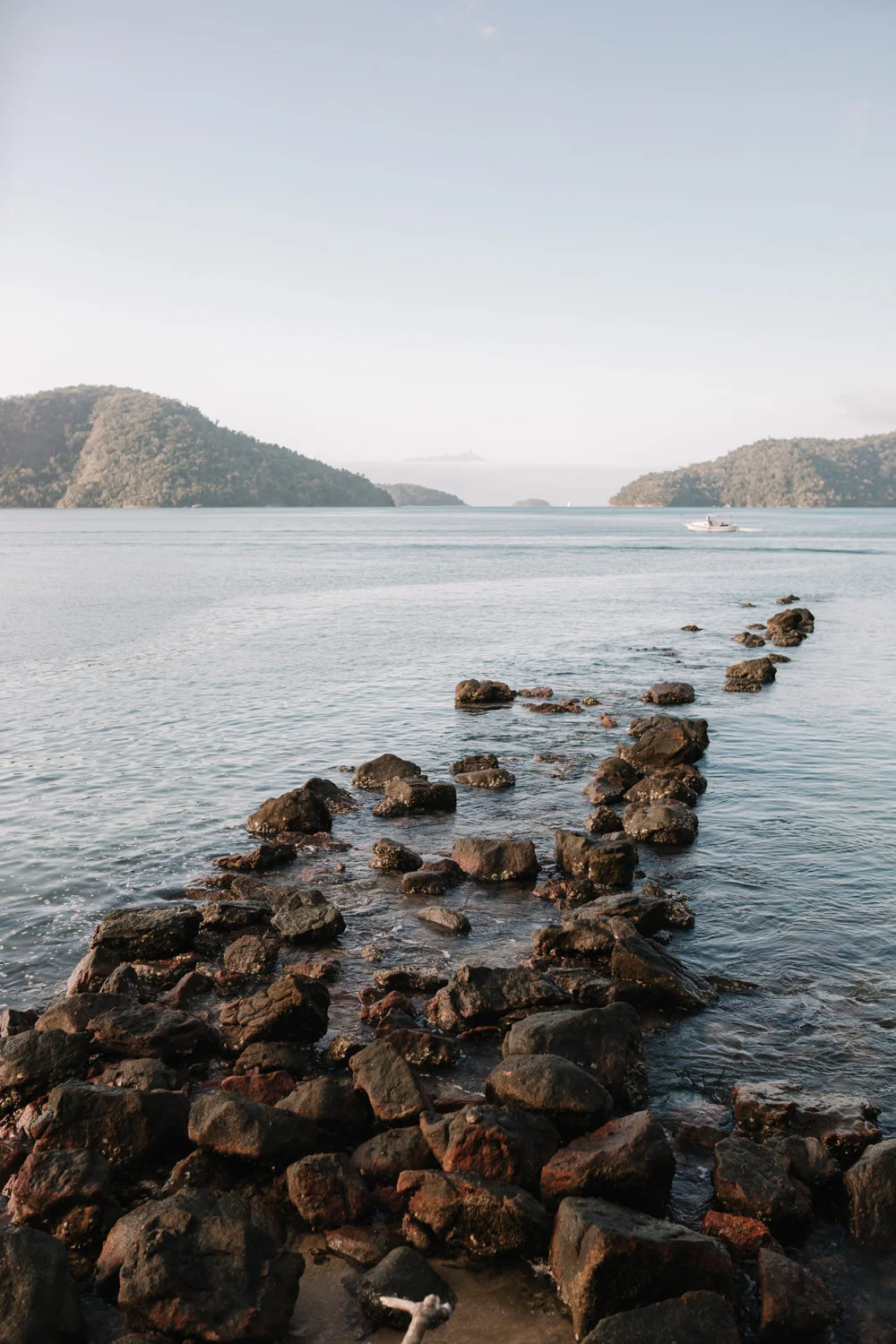
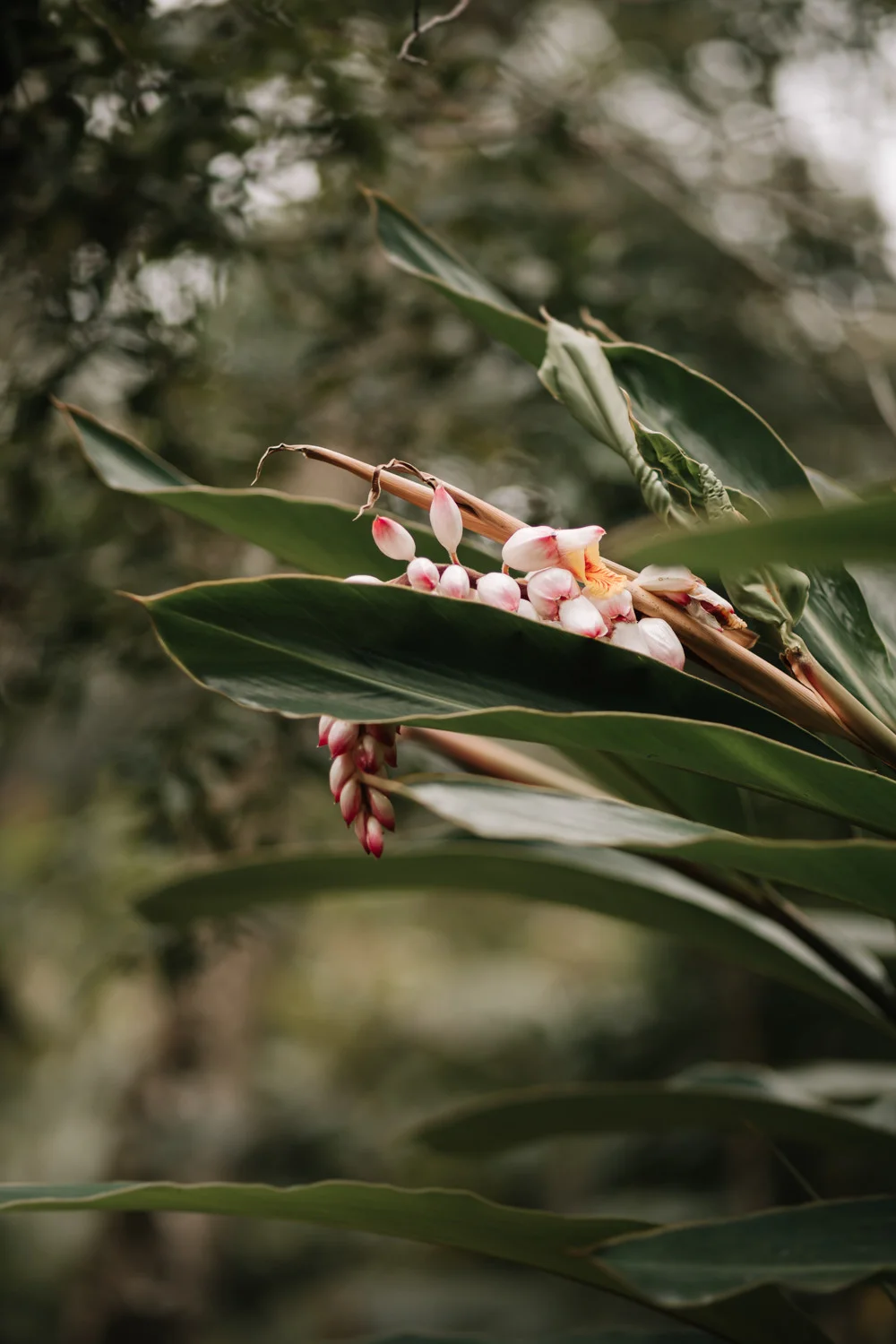
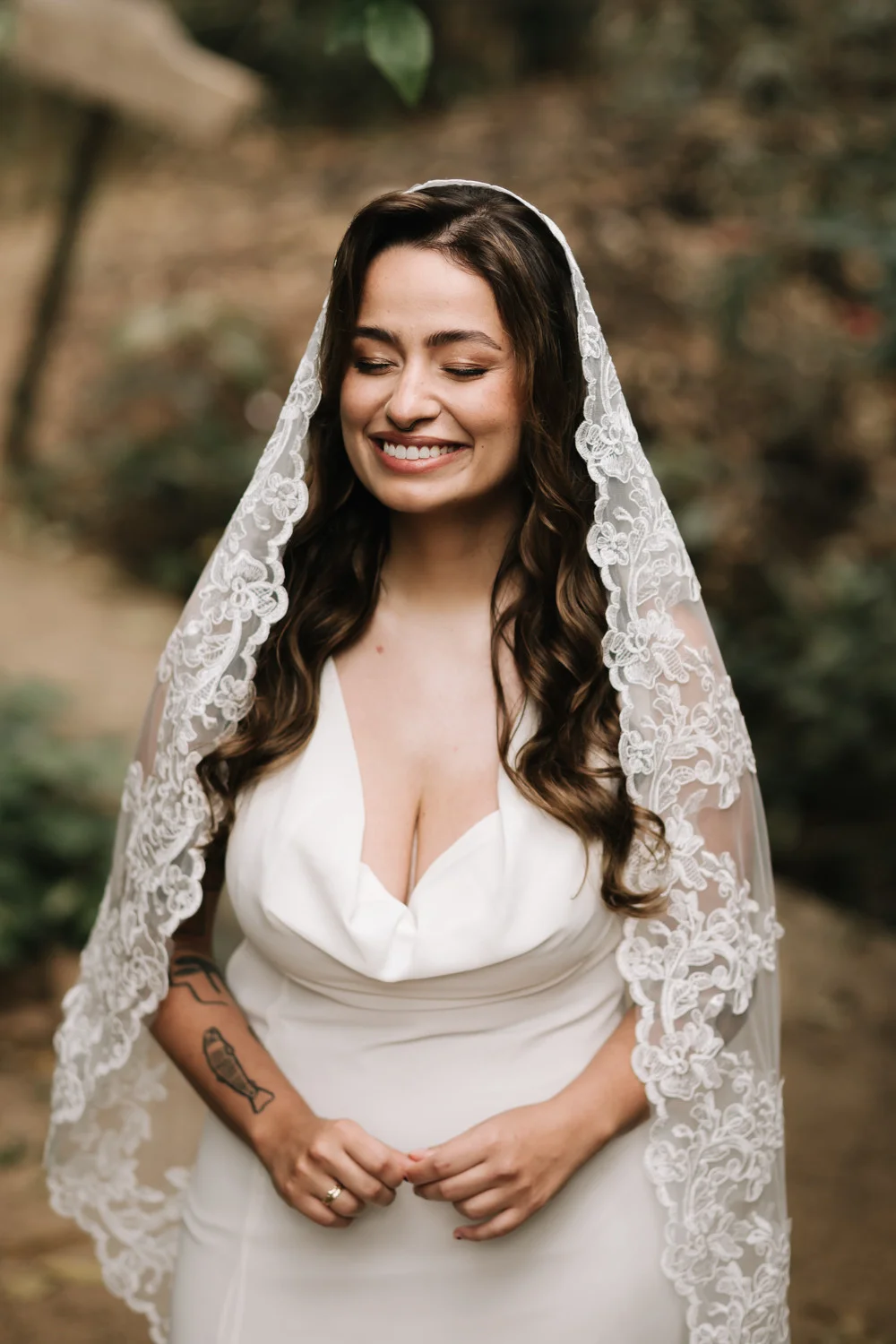
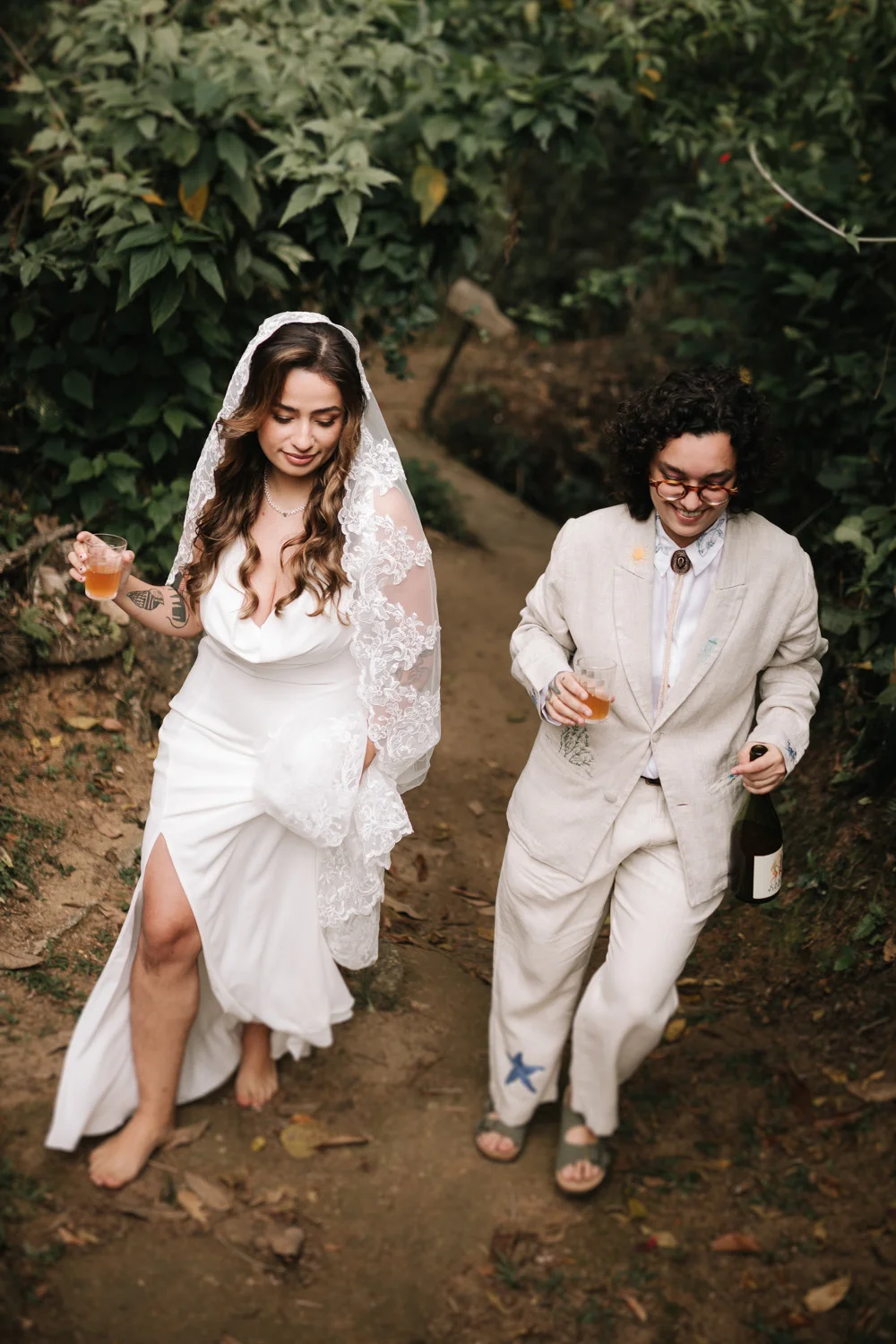
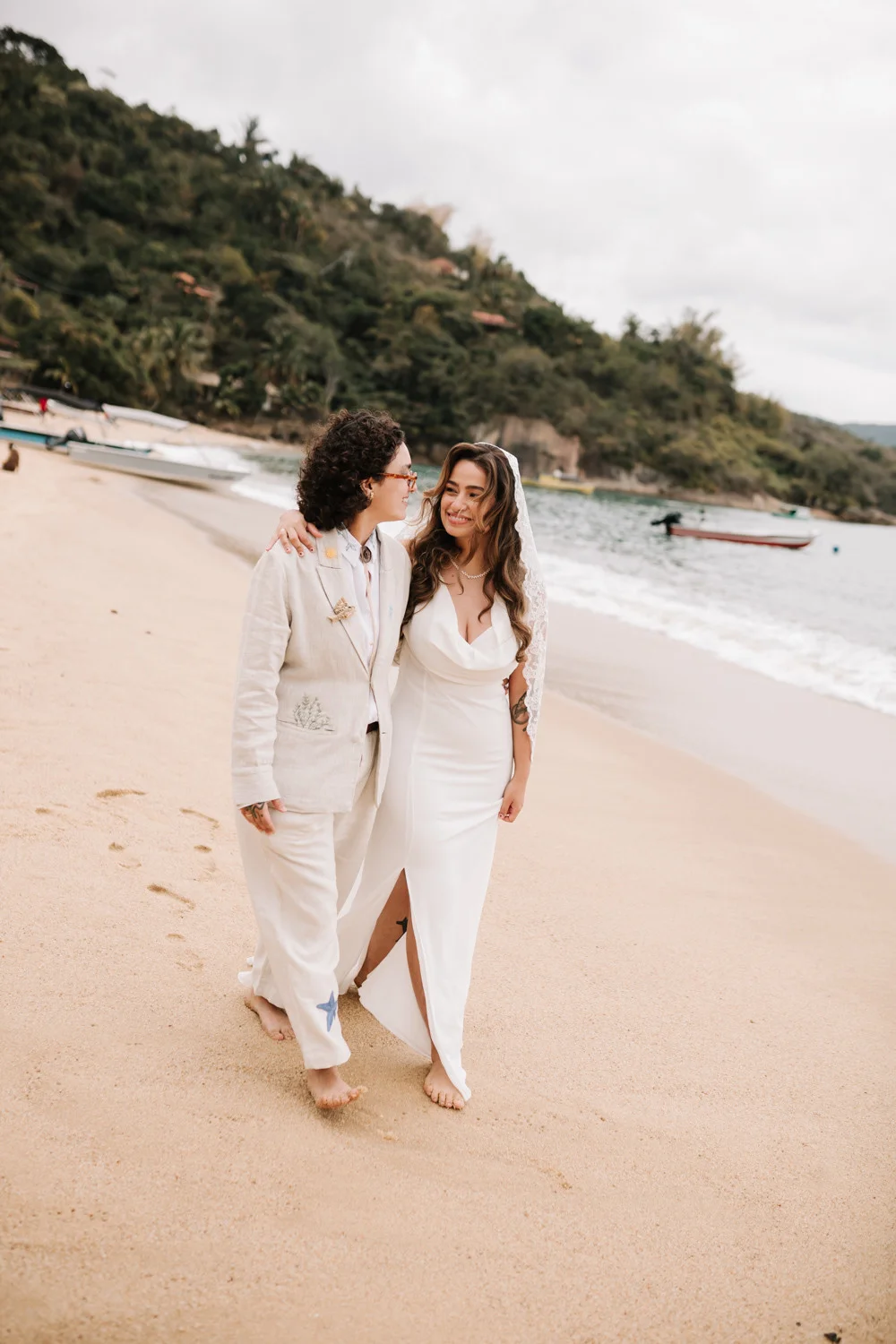
The palette the couple chose drew directly from what surrounded them: soft whites, earthy greens, sandy neutrals, weathered wood tones and deep ocean blues. They did not need to impose a color story onto Pouso das Flores. The Atlantic Forest and the coastal landscape supplied it.
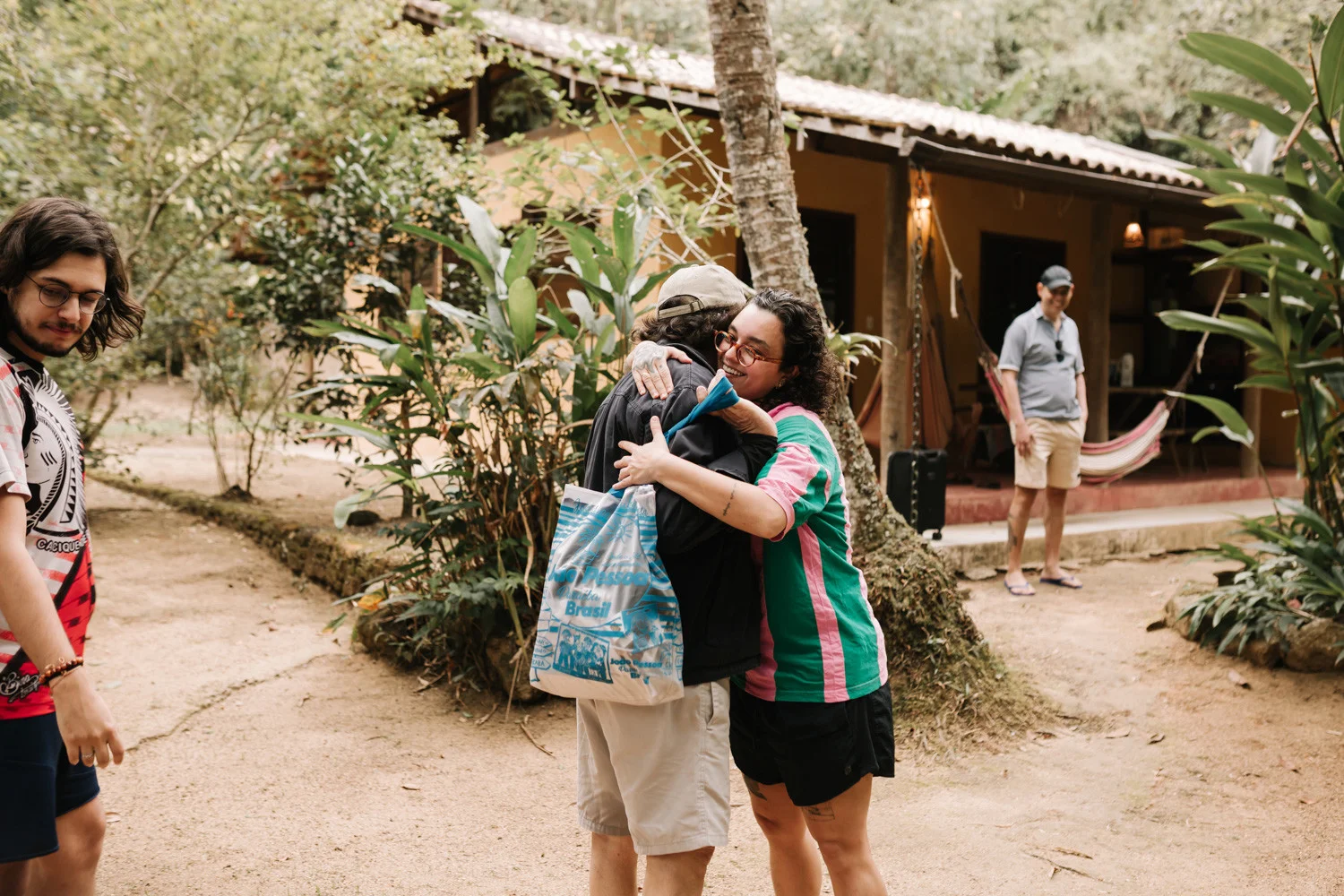
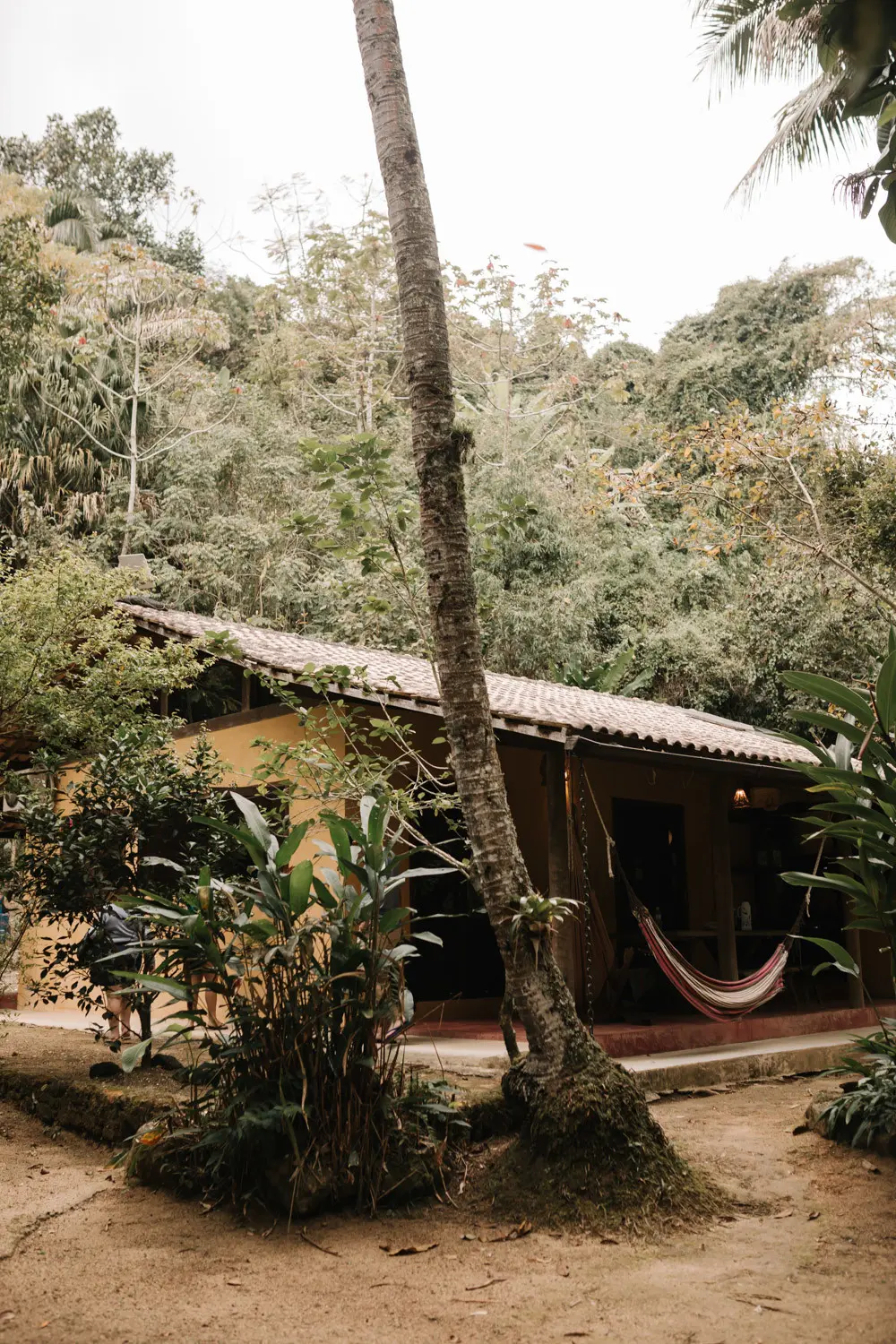
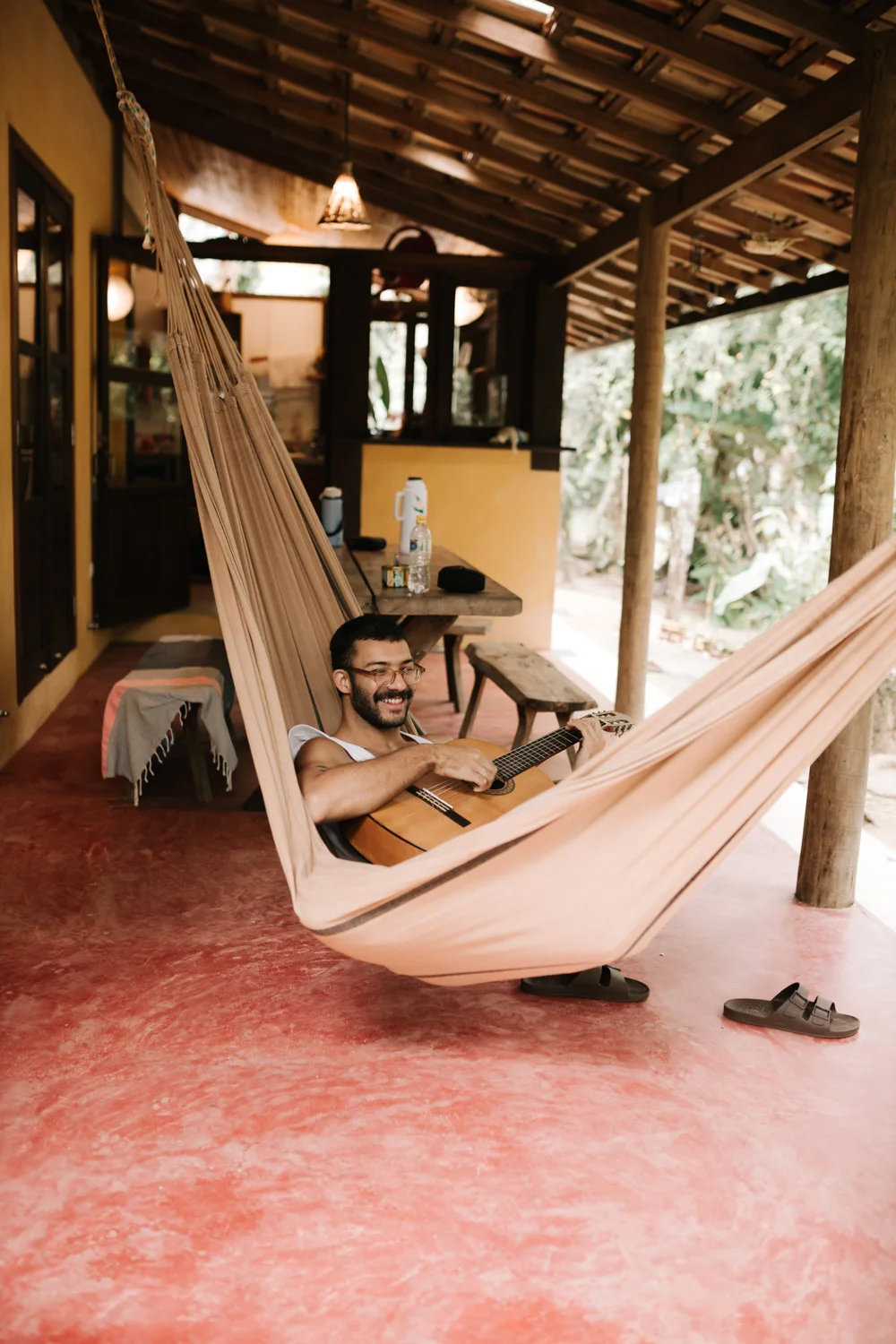
The Caiçara Community as Collaborator
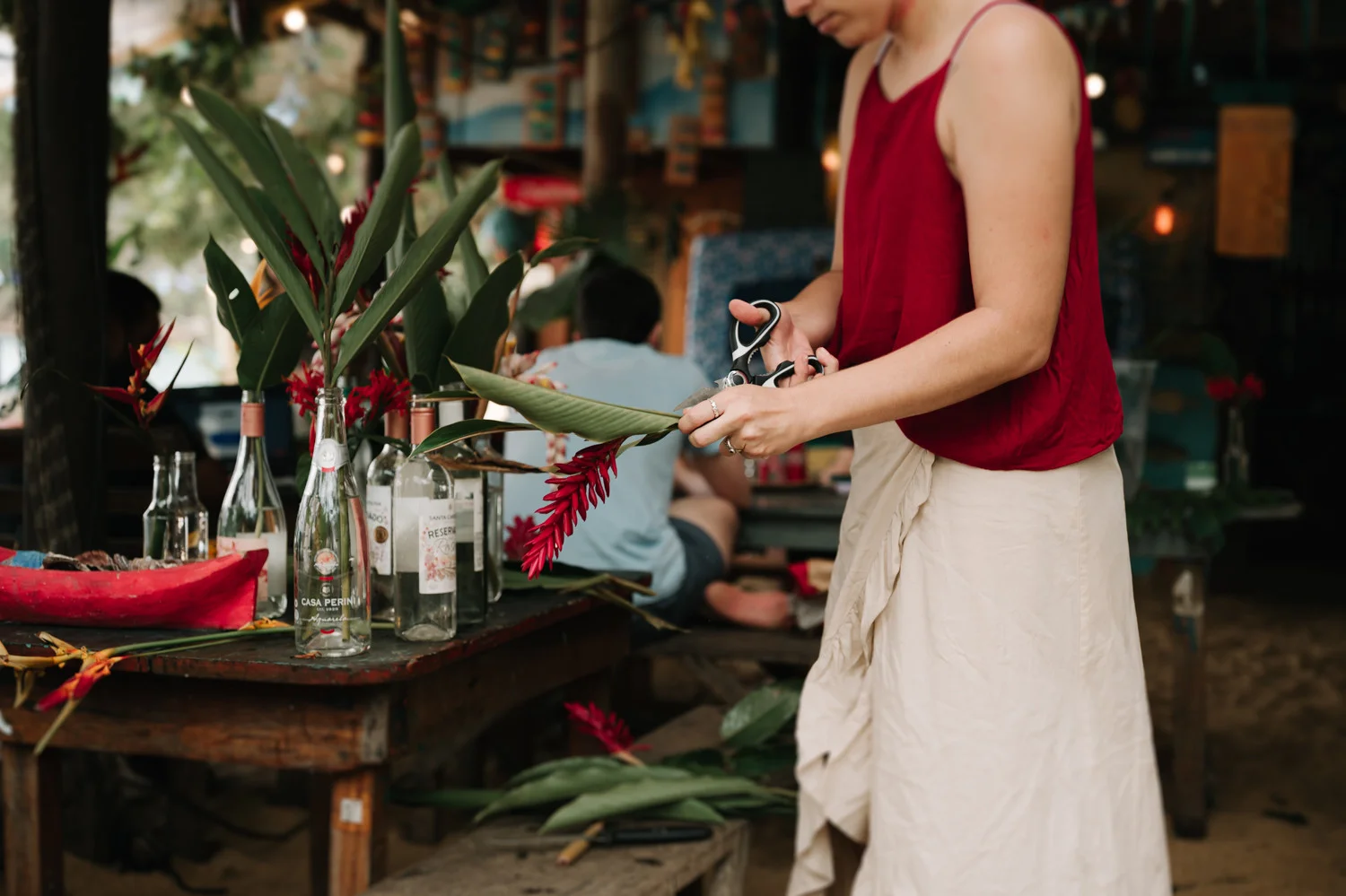
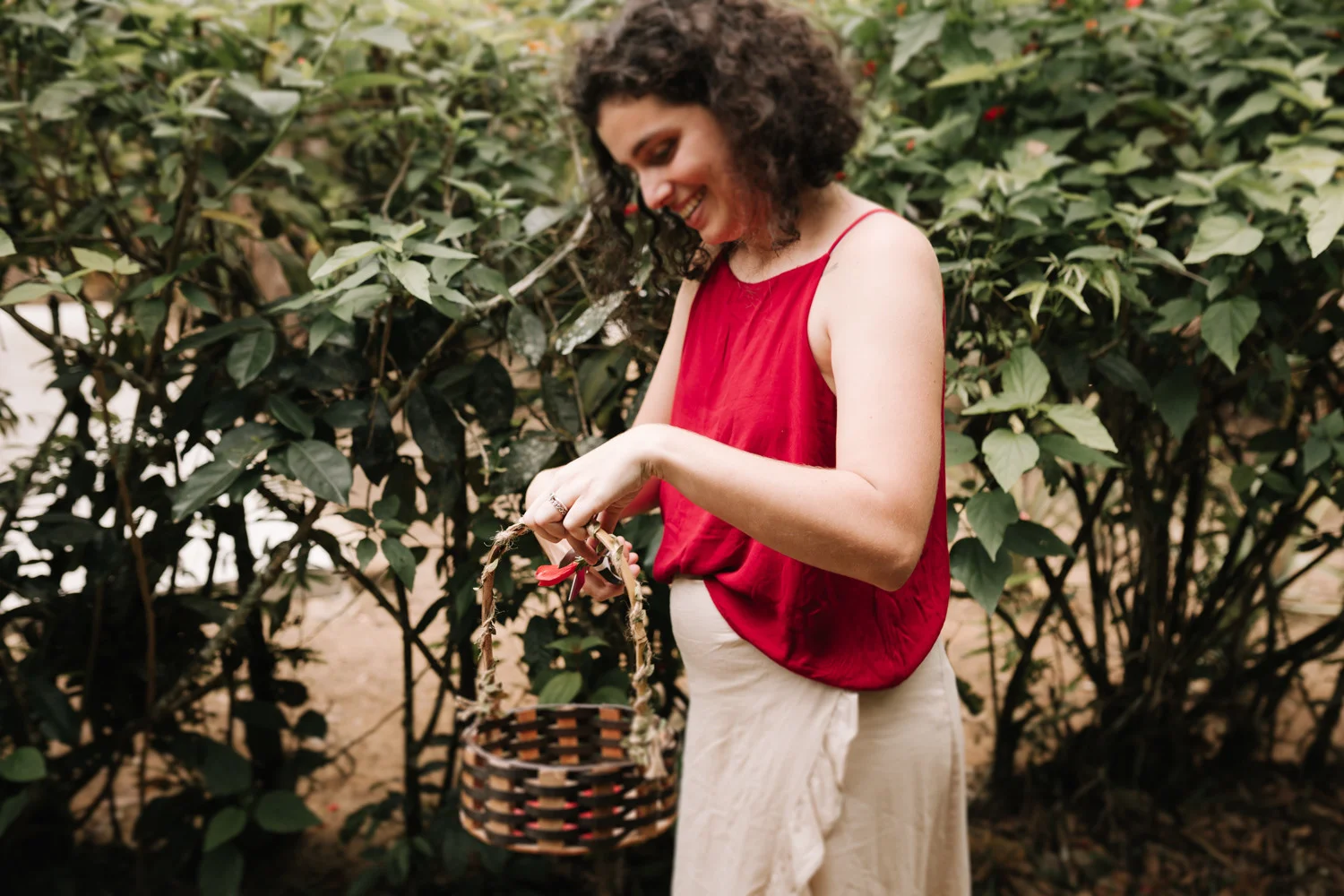
The florals followed the same principle as everything else: minimal, organic, and made to recede into the landscape rather than claim attention. Greenery and simple arrangements worked alongside the Atlantic Forest rather than against it, allowing the surrounding environment to function without interruption.
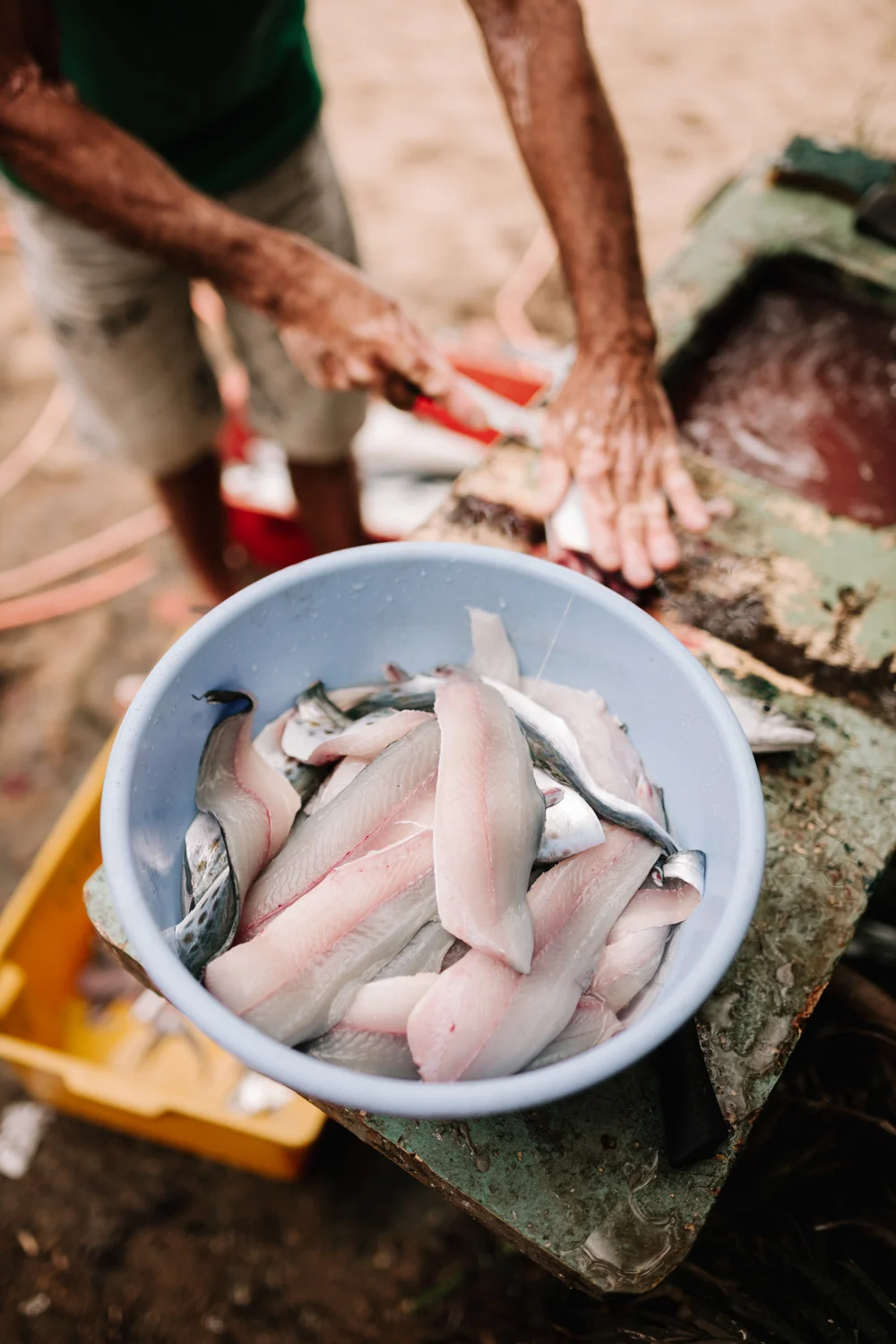
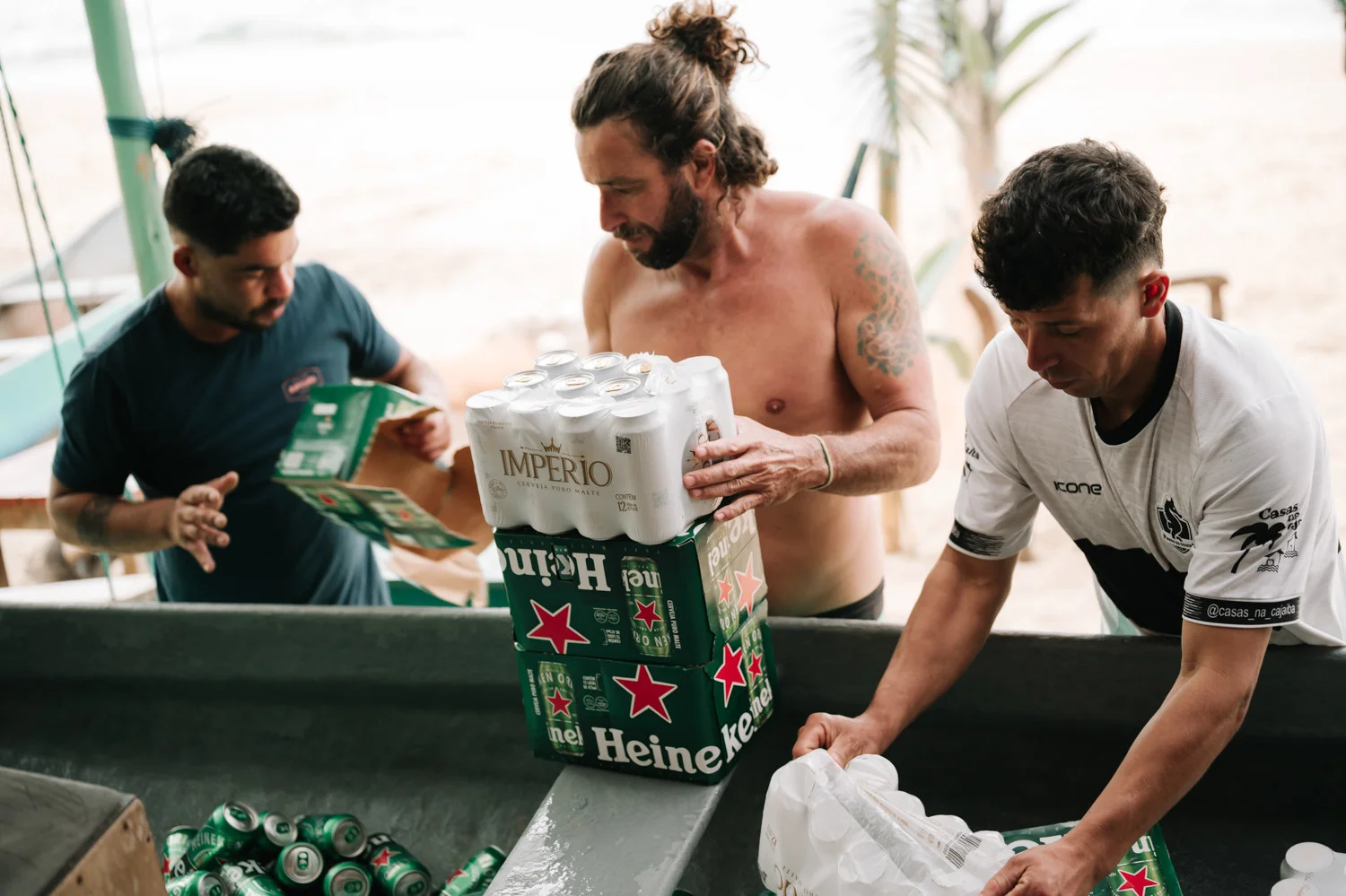
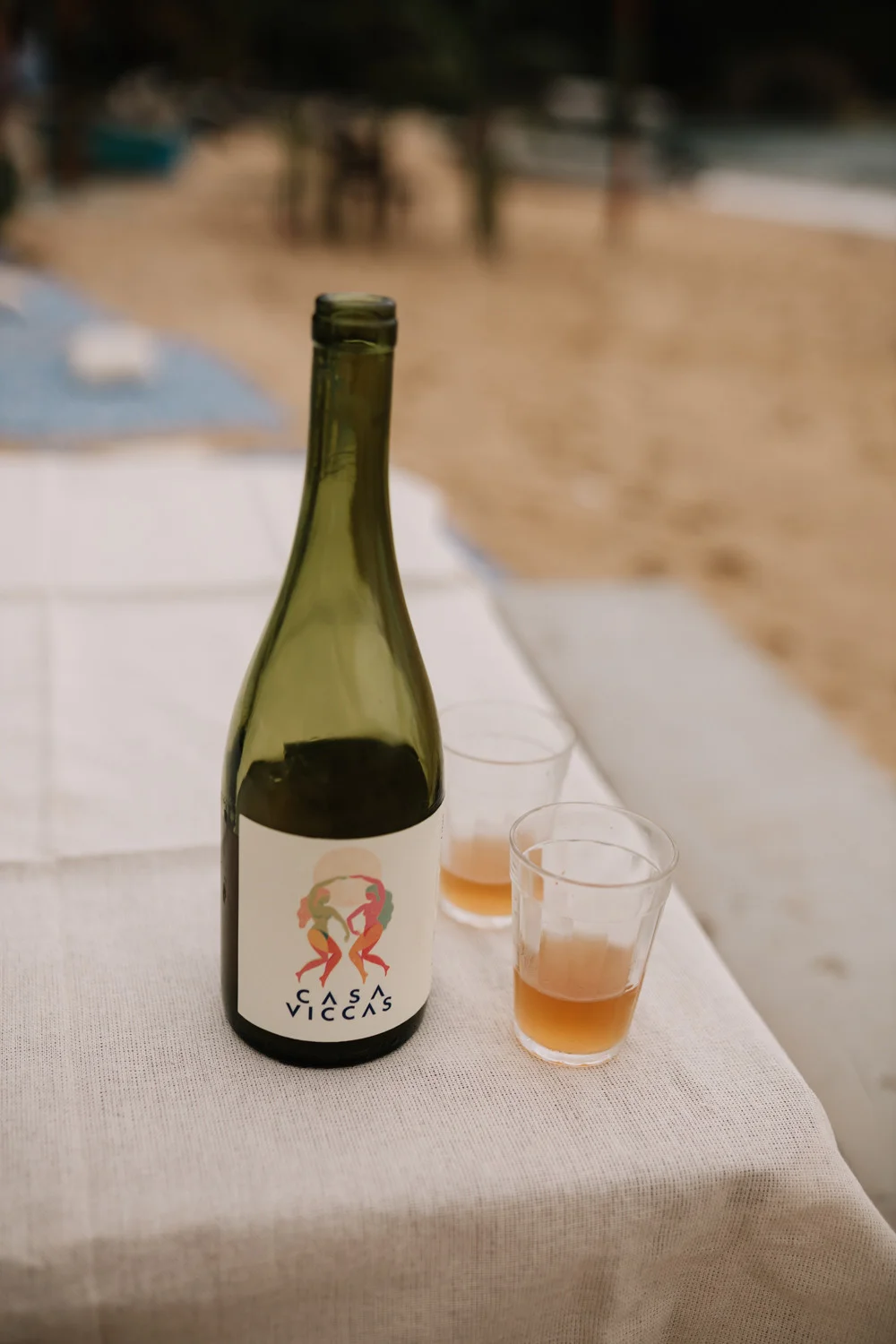
Local food, prepared by the caiçara community itself, anchored the reception. This was not a catered approximation of regional cuisine but the actual cooking of the people who live and work in that place. The meal was, in that sense, the most direct possible expression of where Rafaela and Nathalia chose to celebrate. “The entire wedding was shaped around their real life in Paraty and their connection to the place,” says the couple’s wedding photographer Catharine Sant’Ana. “Choosing a remote caiçara community accessible only by boat was already a deeply personal decision.”
What surprised them most, she says, was how natural everything felt inside a process that could have felt complex. “Planning a wedding in a remote community could have felt complex, but instead, it became something deeply welcoming and collaborative. The warmth of the people, the openness of the environment, and the support they found along the way made the experience feel even more meaningful.”
Three Years, Then a Forró
Rafaela and Nathalia were engaged for three years before September arrived. When the moment came for a first dance, they skipped the slow ballad entirely. Instead, they danced forró, a traditional Brazilian rhythm whose syncopated footwork and close-hold partnering requires actual commitment to learn. So they committed: the couple took forró lessons in the months before the wedding specifically to be ready for this one song at this one moment.
The choice was not decorative. Forró is rooted in the culture of northeastern Brazil and carries a particular energy, joyful, communal, physical, that a slow first dance simply cannot replicate. For a couple who built their celebration around the authentic textures of Brazilian life in Paraty, it was the only logical conclusion to the ceremony.
On Getting Ready
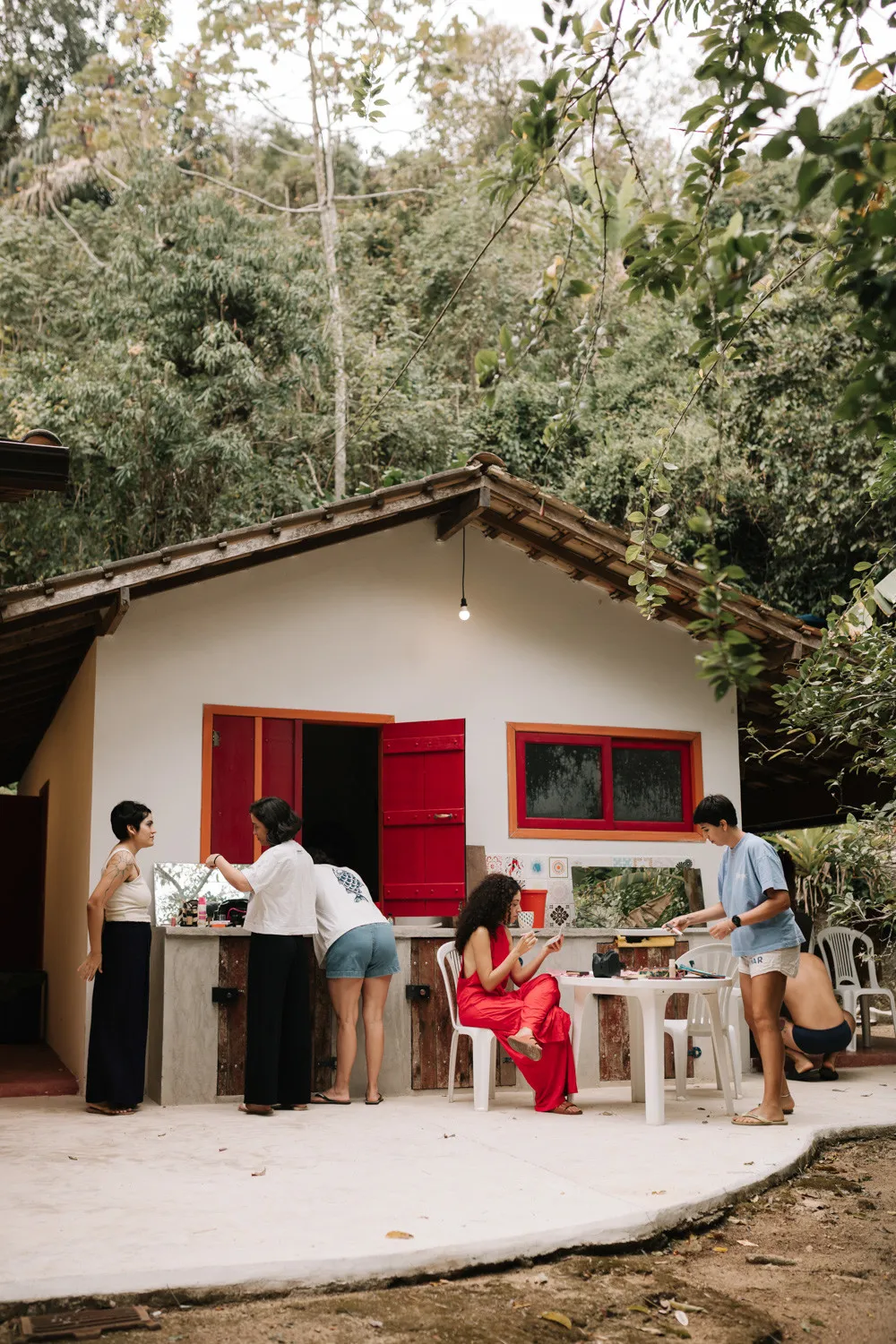
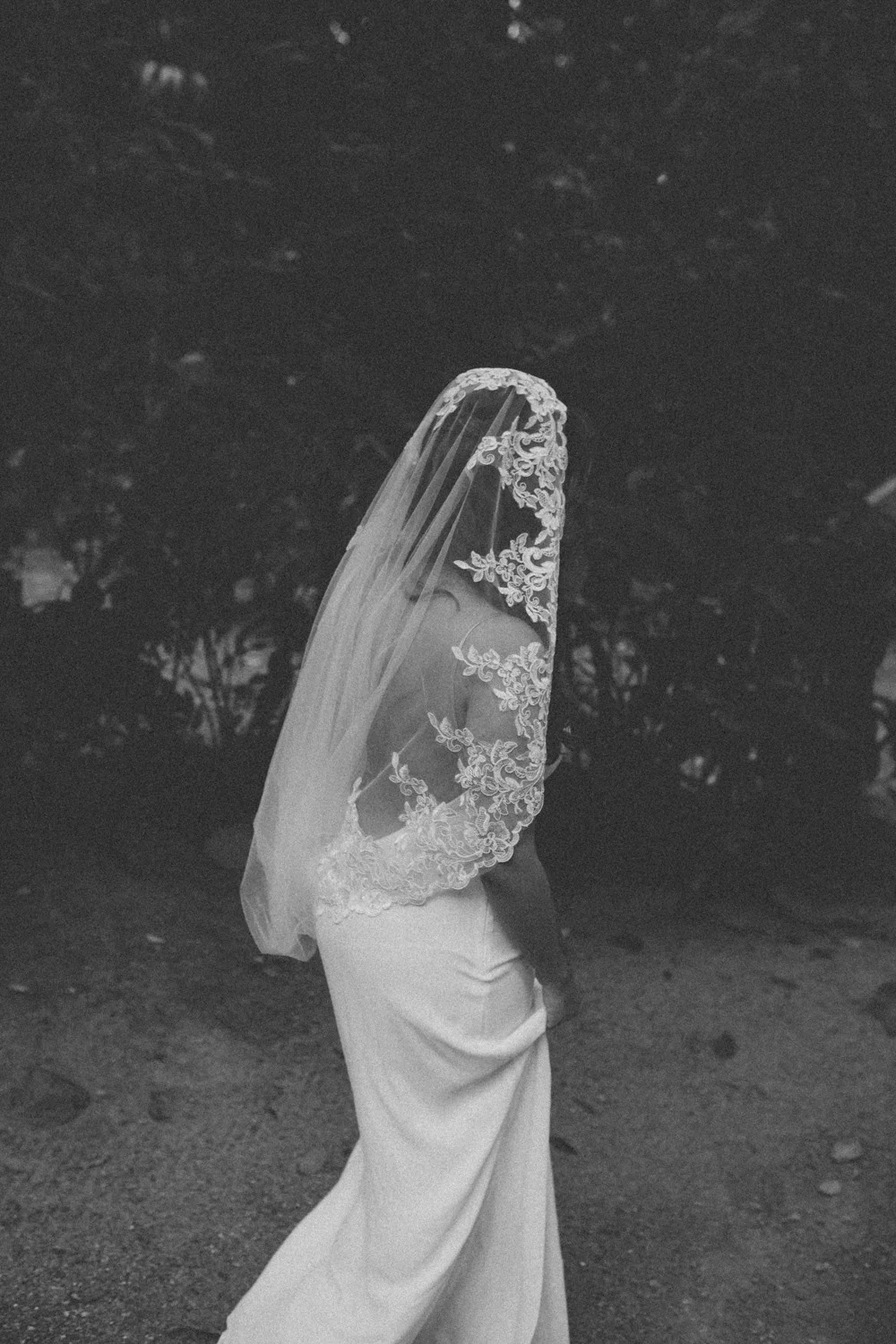
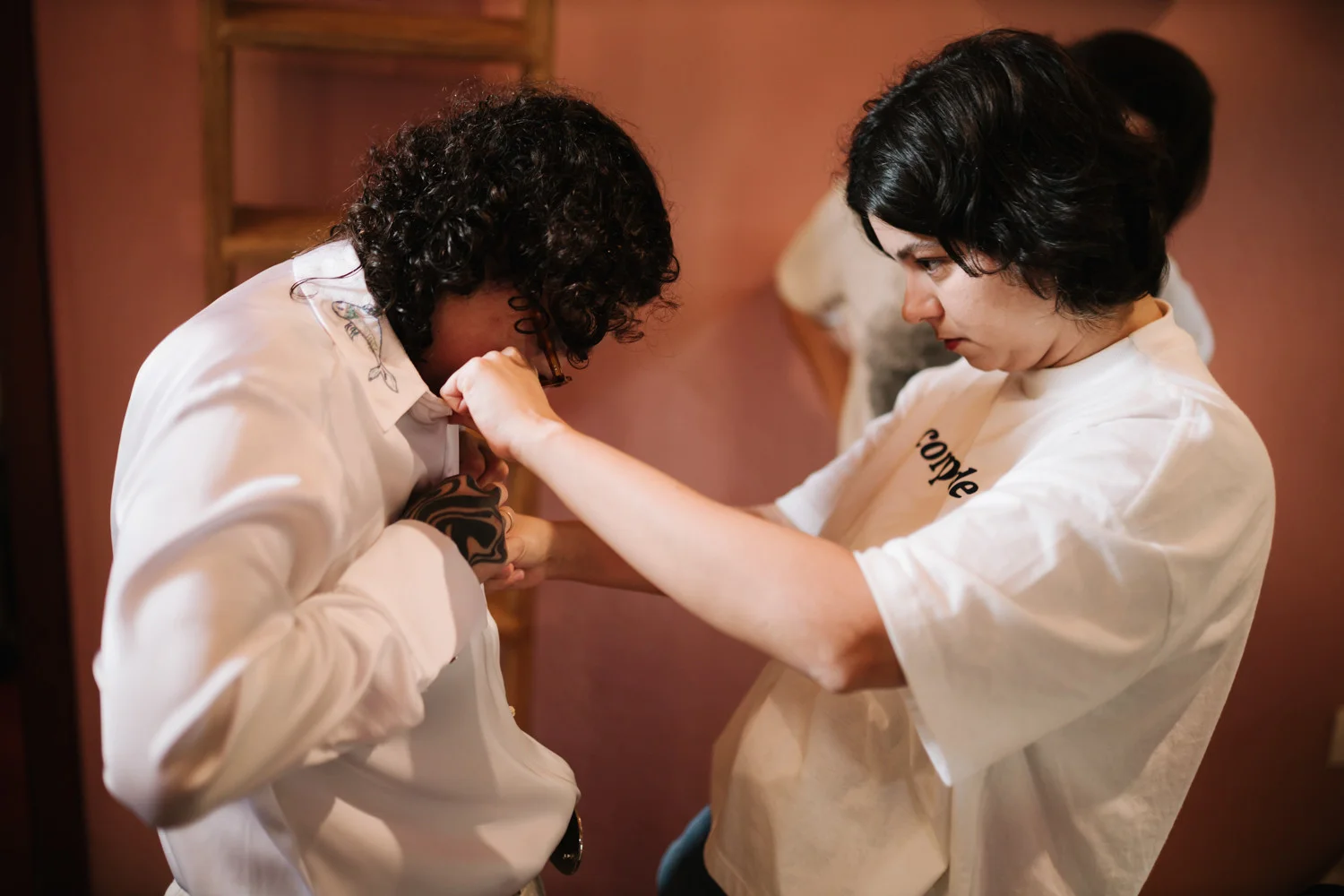
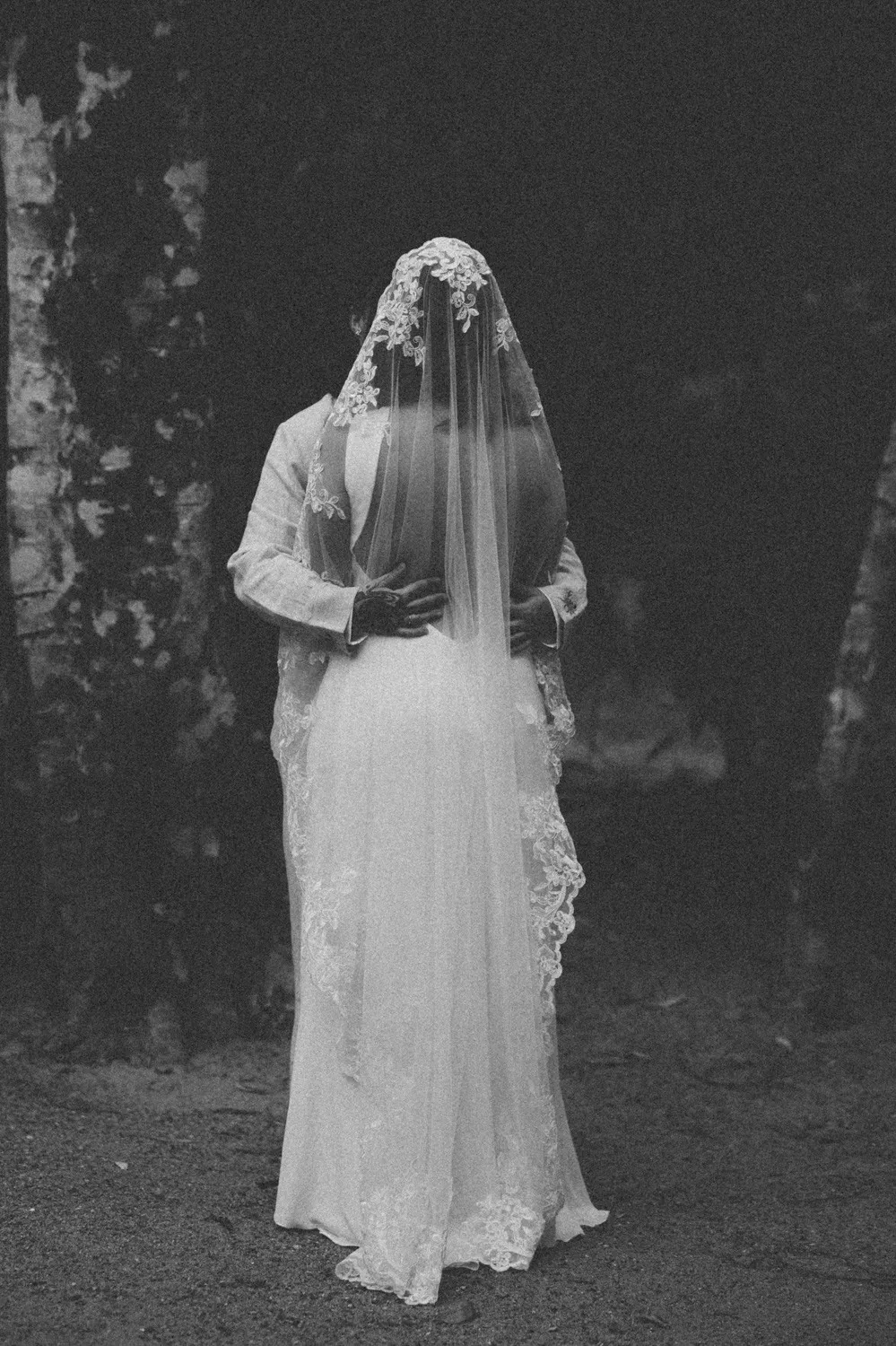
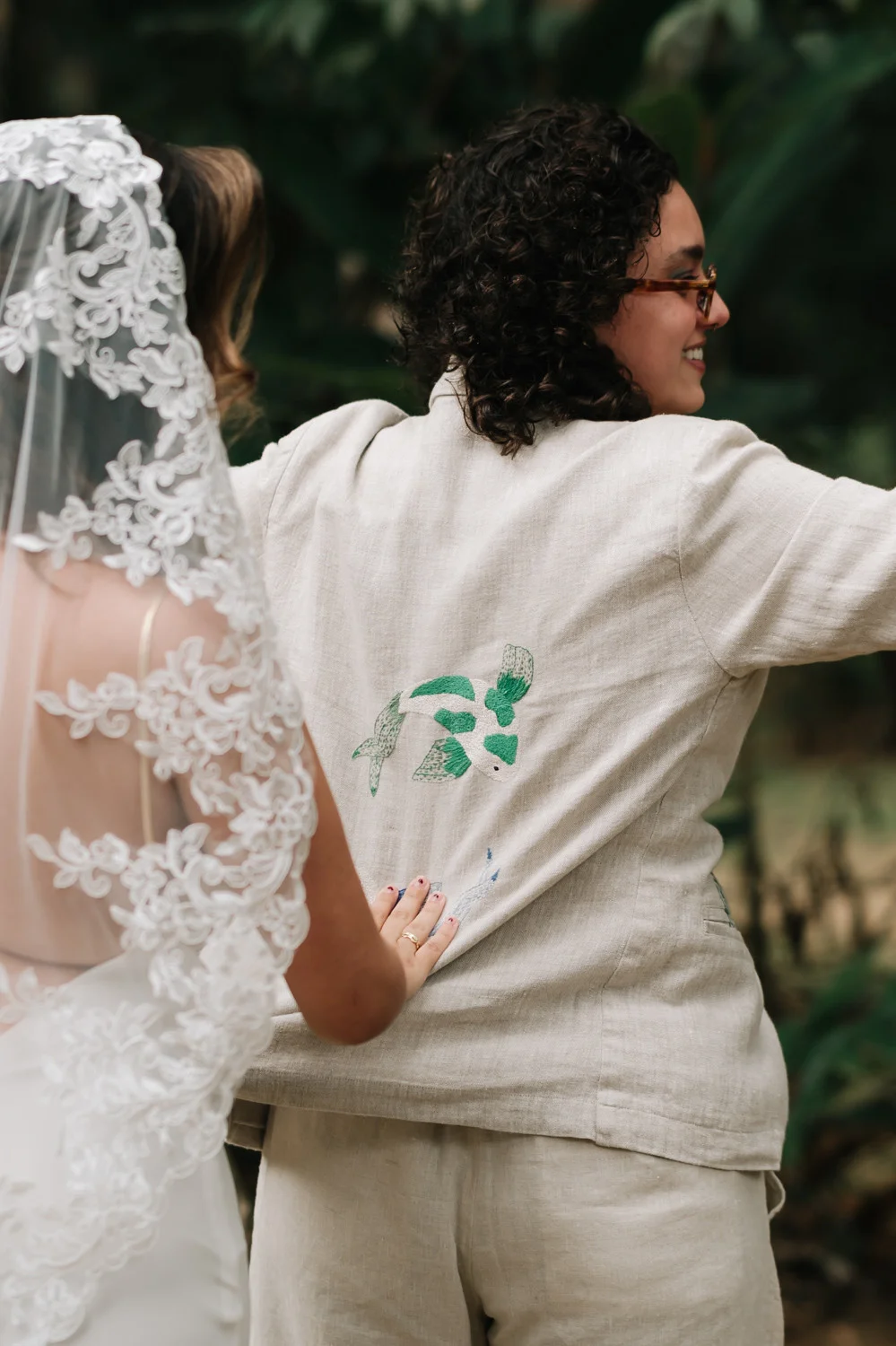
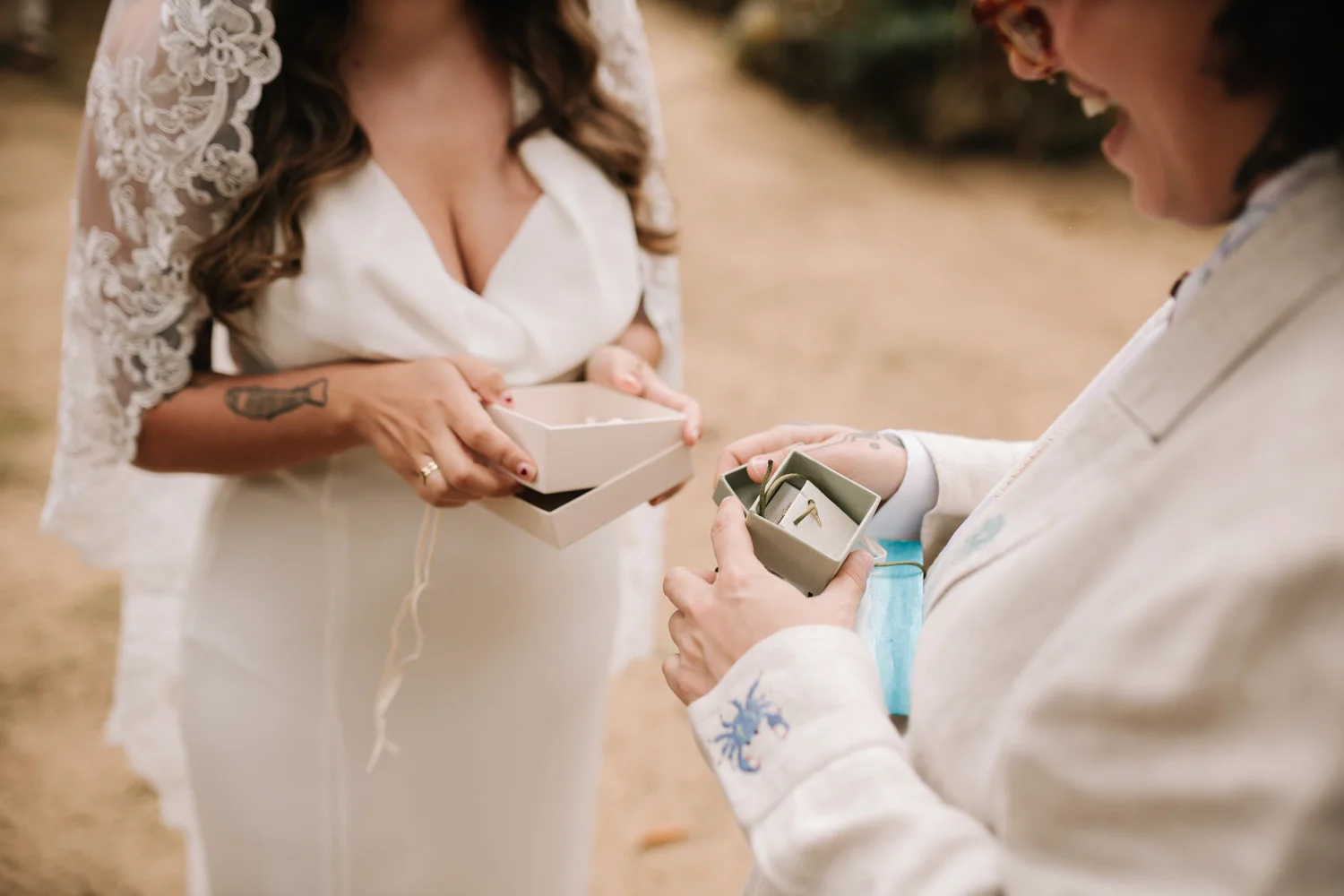
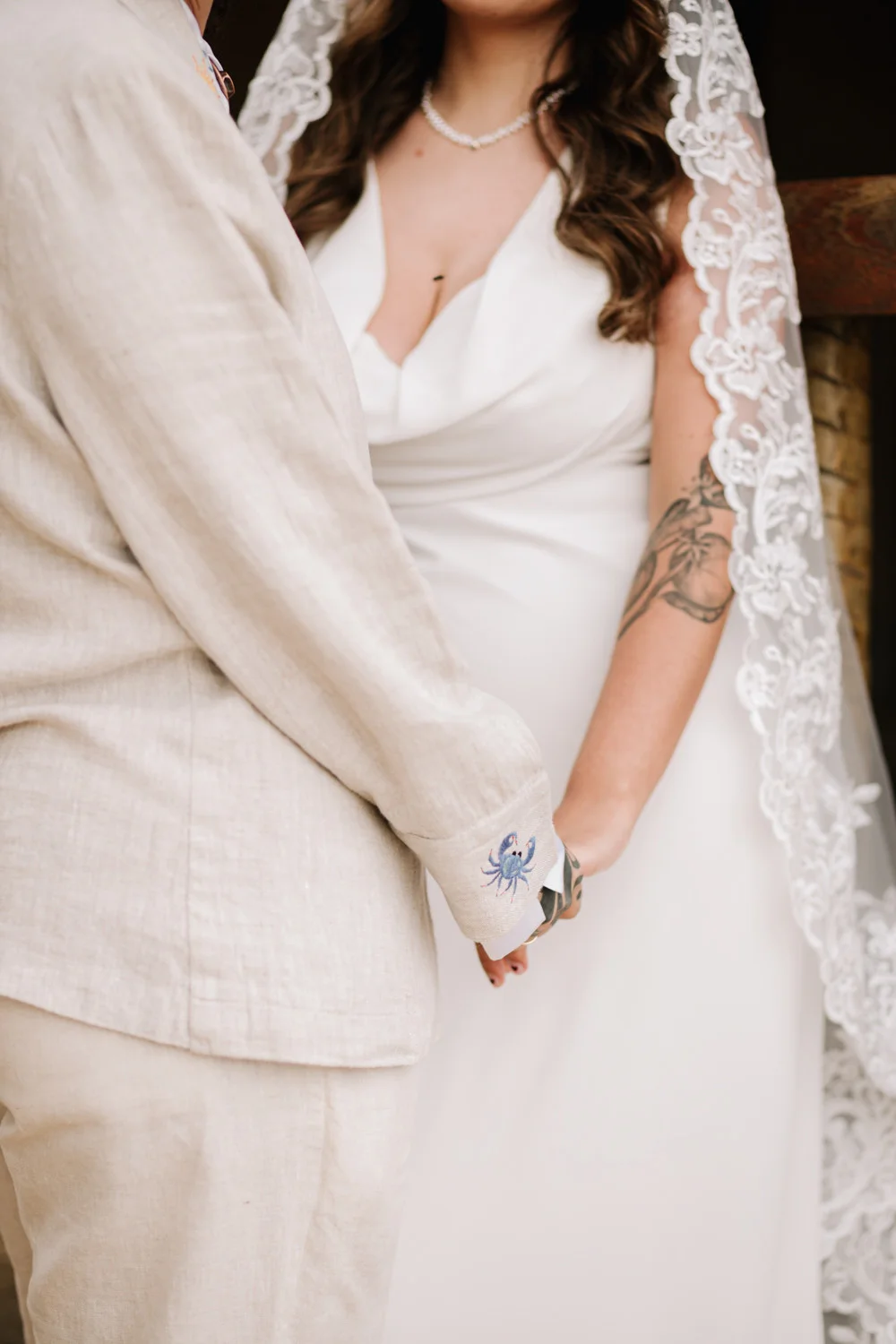
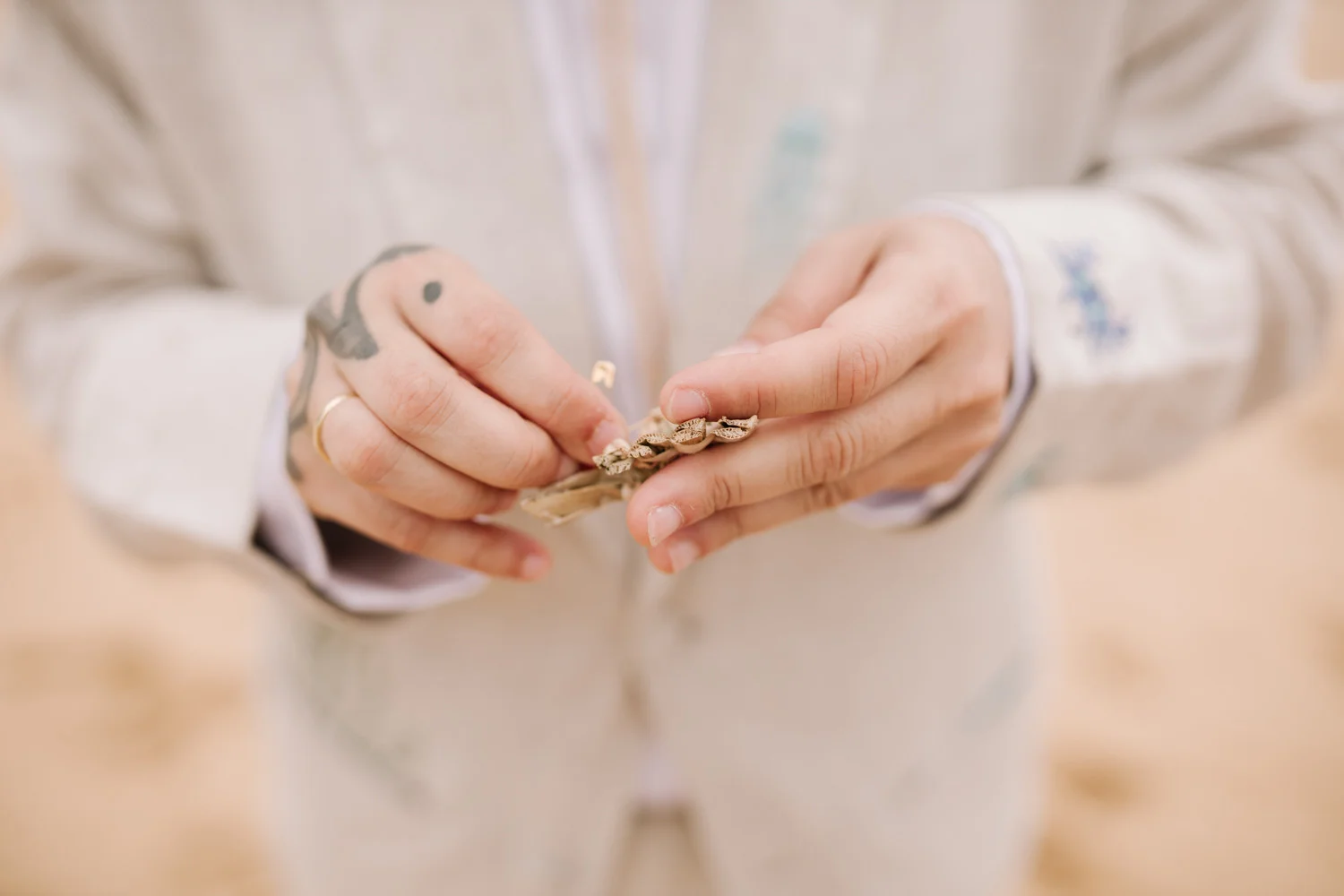
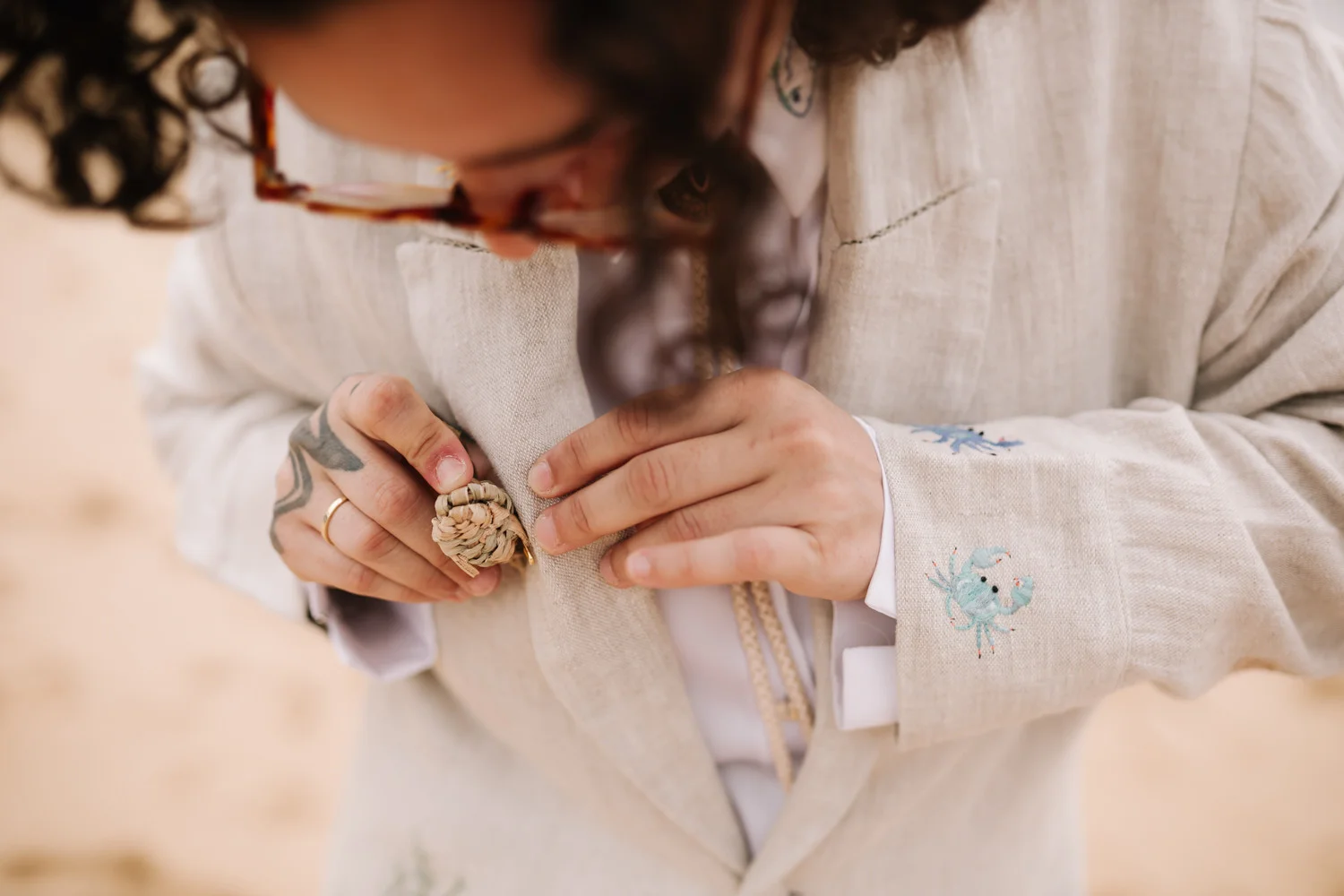
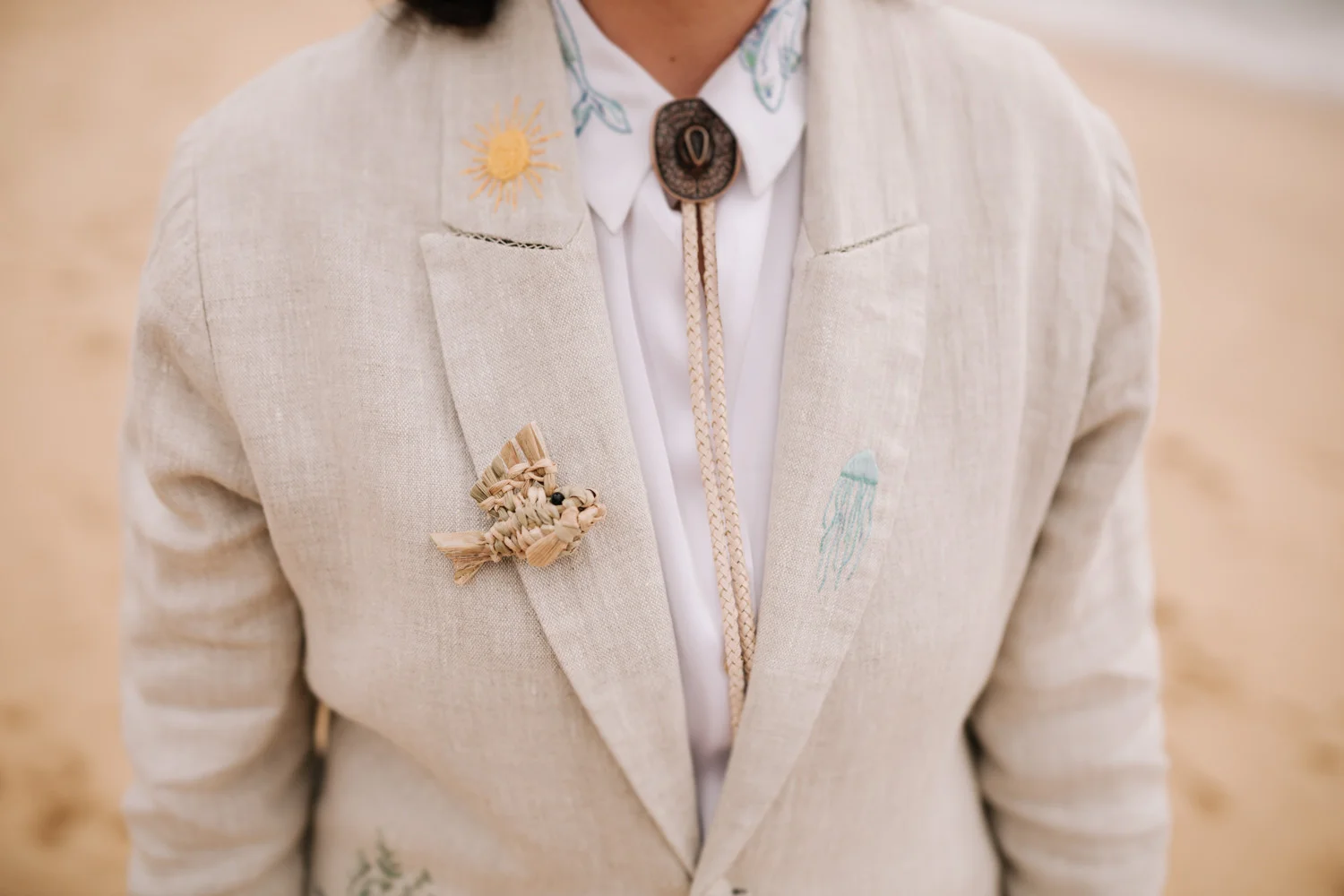
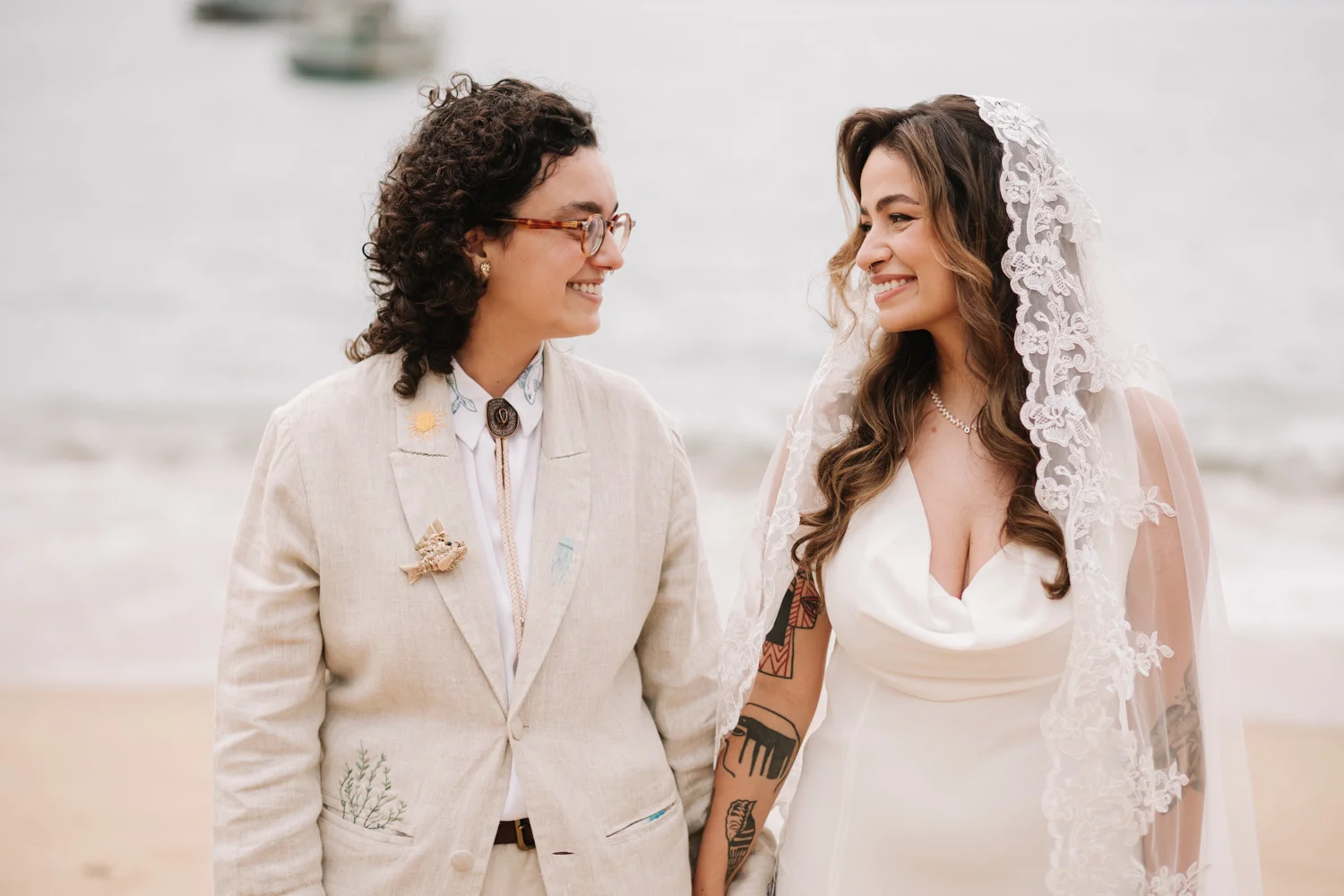
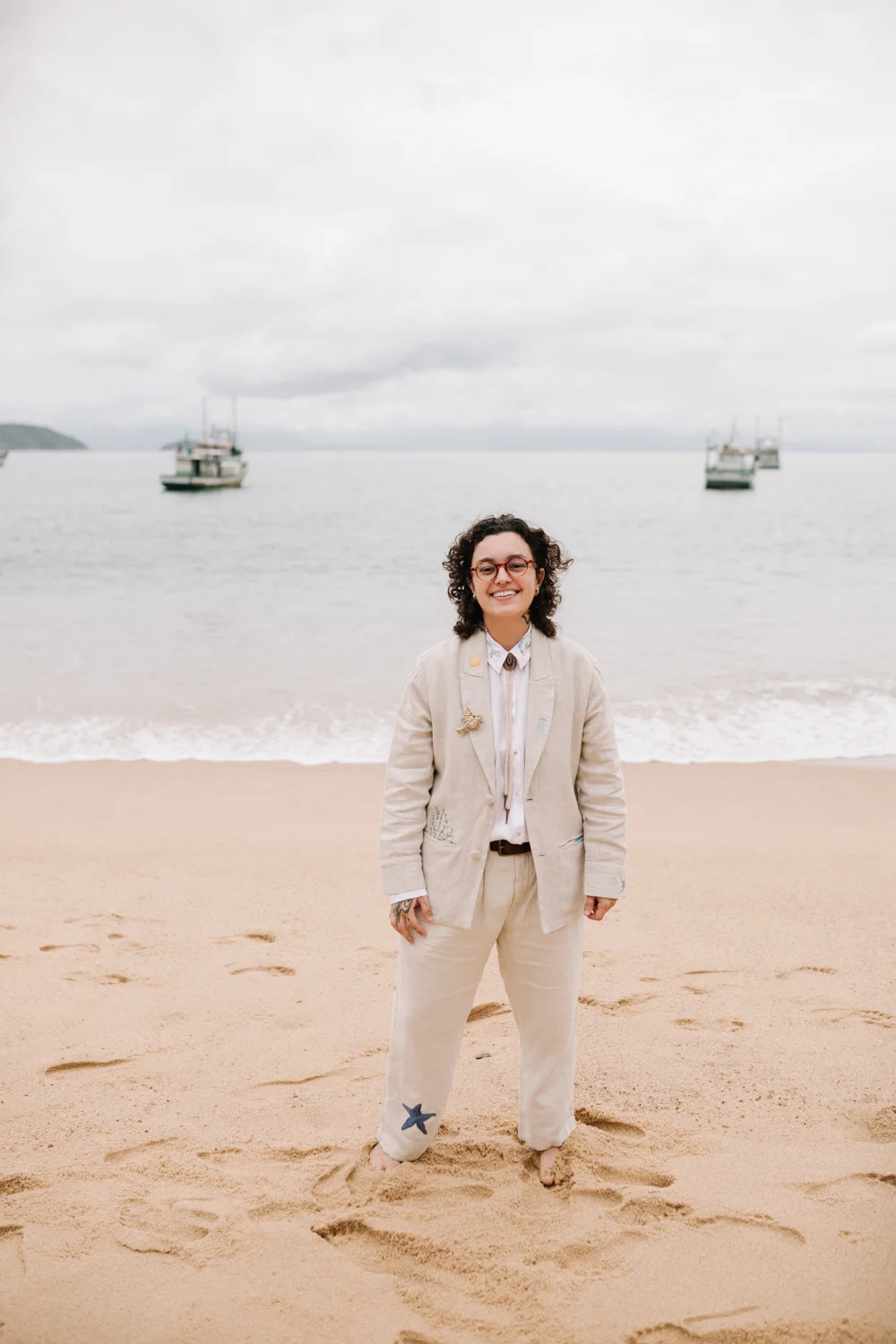
Both Rafaela and Nathalia dressed independently that morning, each preparing in their own space before the first look brought them together. Their attire was handled entirely by them, a cohesive approach that kept both looks within the same considered visual register as the rest of the day.
The morning apart gave each of them a private hour with the day before it became shared, before the boats and the sea and the community and the forró. That quiet time—separate and anticipatory—belonged only to them.
Finding the Right People
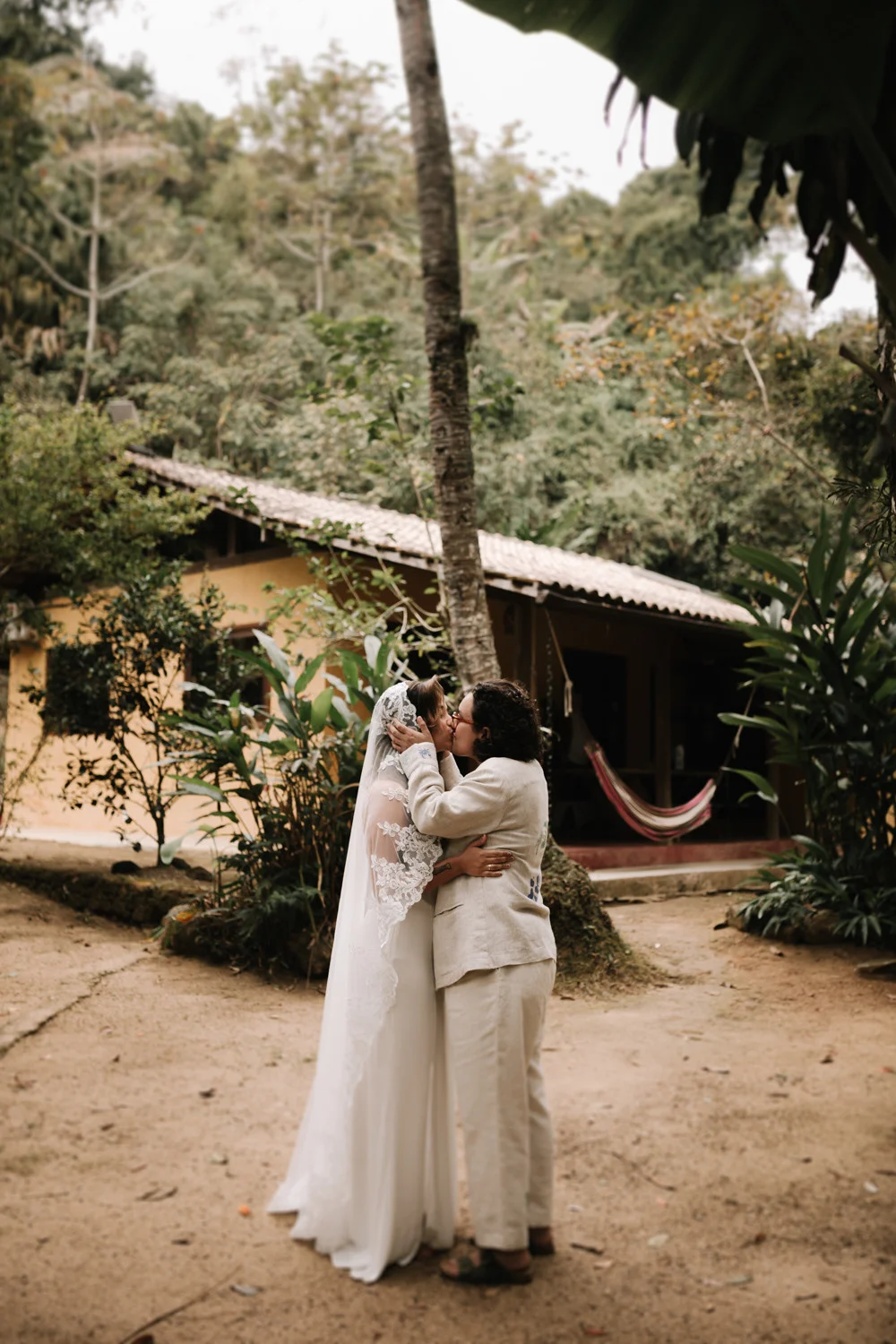
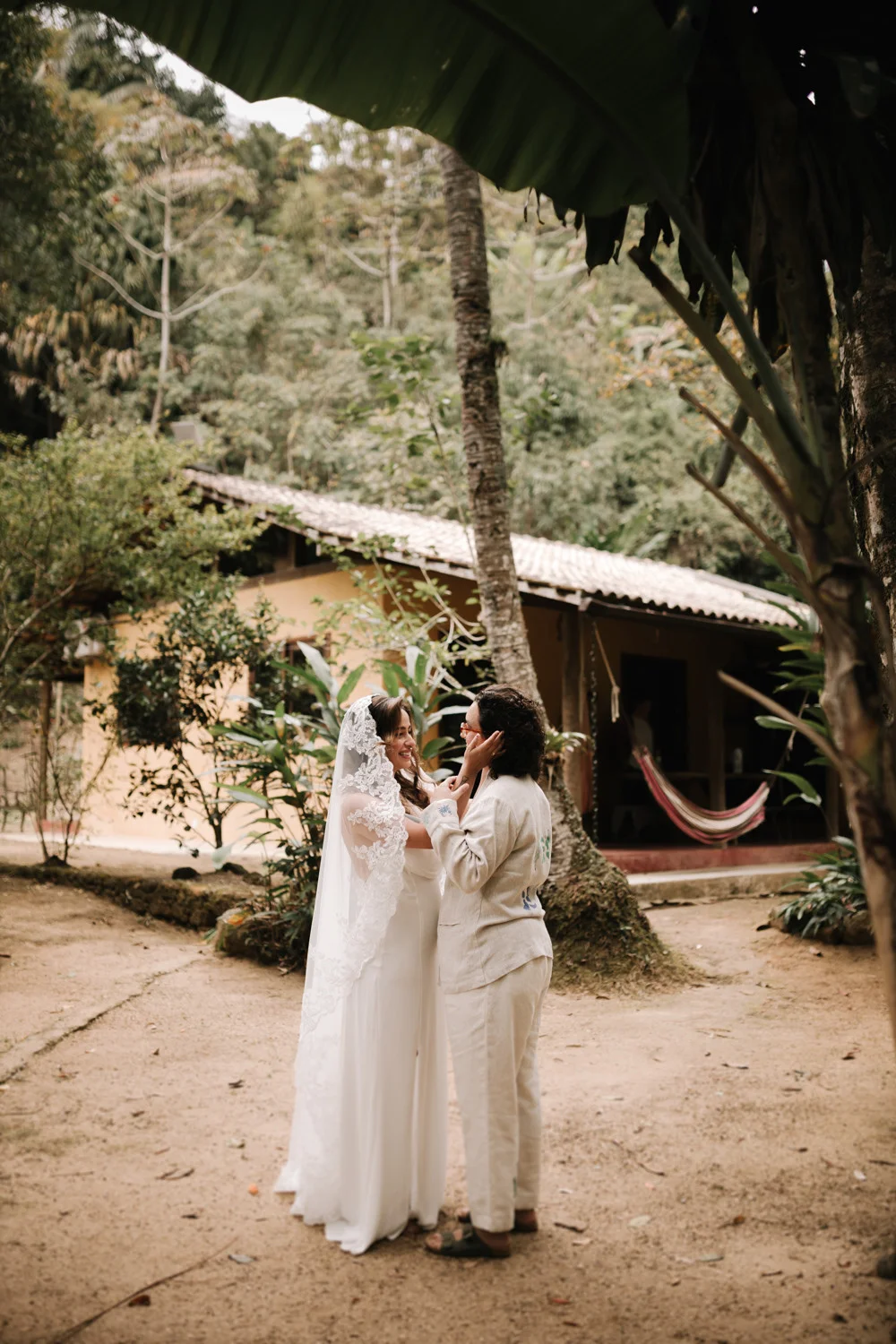
Planning a wedding as an LGBTQ+ couple in an industry still largely organized around traditional formats requires more intention and care. “One of the main challenges is navigating a wedding industry that is still largely structured around traditional expectations,” says Sant’Ana. “Finding vendors and spaces that are truly welcoming and understanding can require more intention and care. However, choosing the right people made all the difference in creating a safe and genuine experience.”
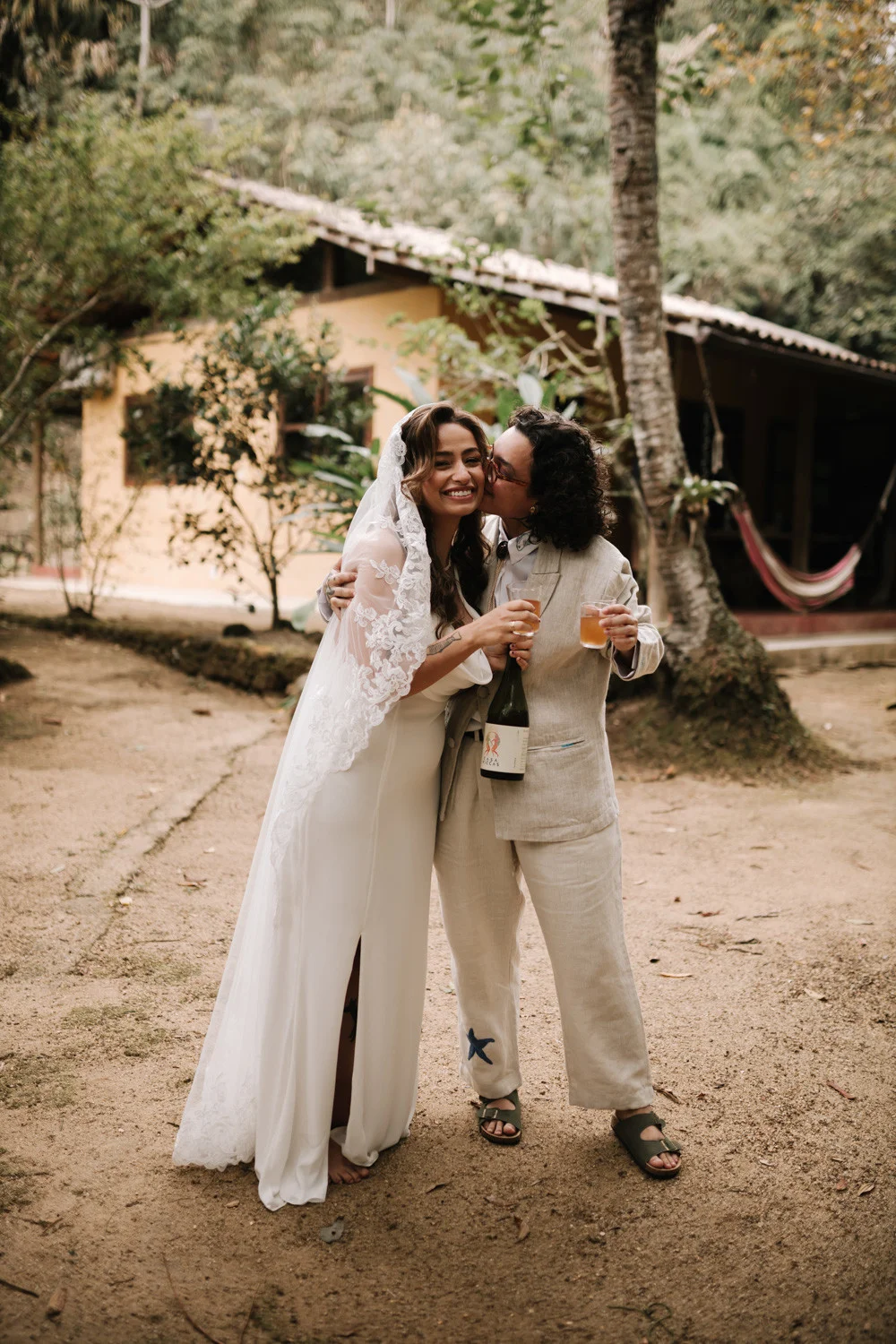
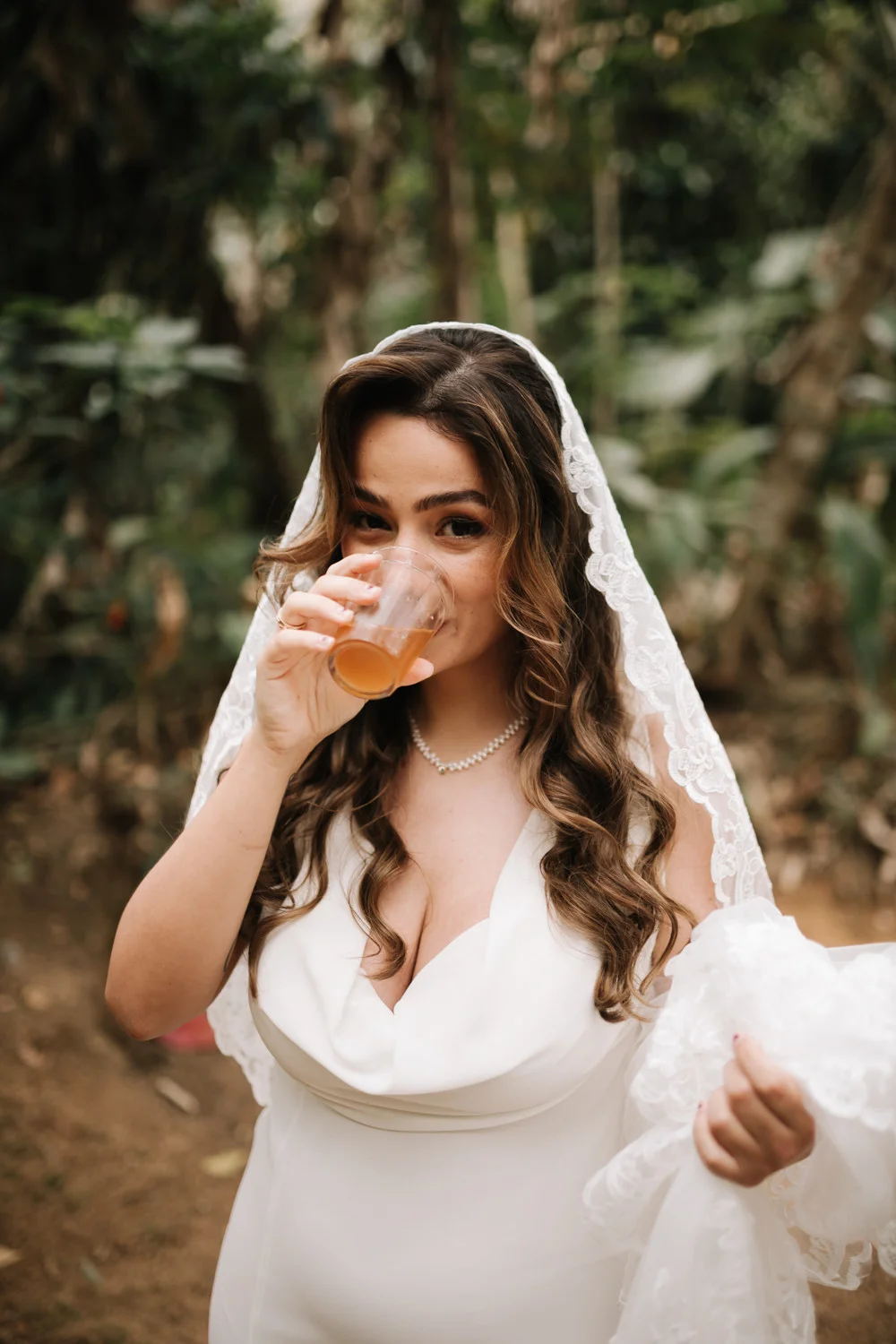
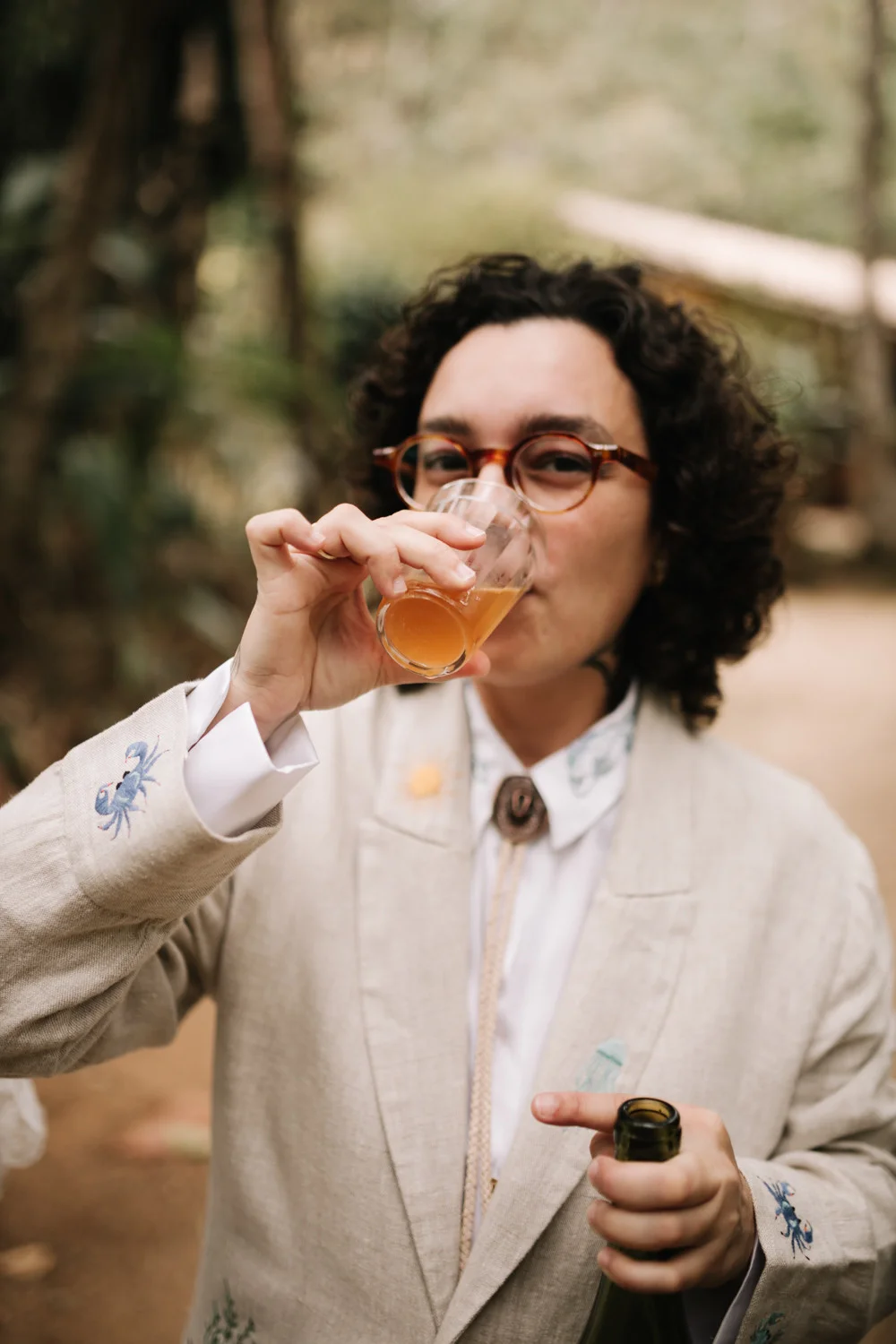
At Pouso das Flores, that safety was present from the start. The community’s warmth and the openness of the environment gave the couple room to celebrate without negotiating for it. The remote location, which might have seemed like an obstacle, turned out to be one of the reasons everything worked. Fewer assumptions travel by boat.
Their advice to vendors who want to serve LGBTQ+ couples well is direct: “Listen first, assume less. LGBTQIA+ couples don’t need to fit into traditional formats. They need space to create something that reflects who they are. Respect, openness and genuine care make all the difference in creating a safe and meaningful experience.”
Meaning Over Performance
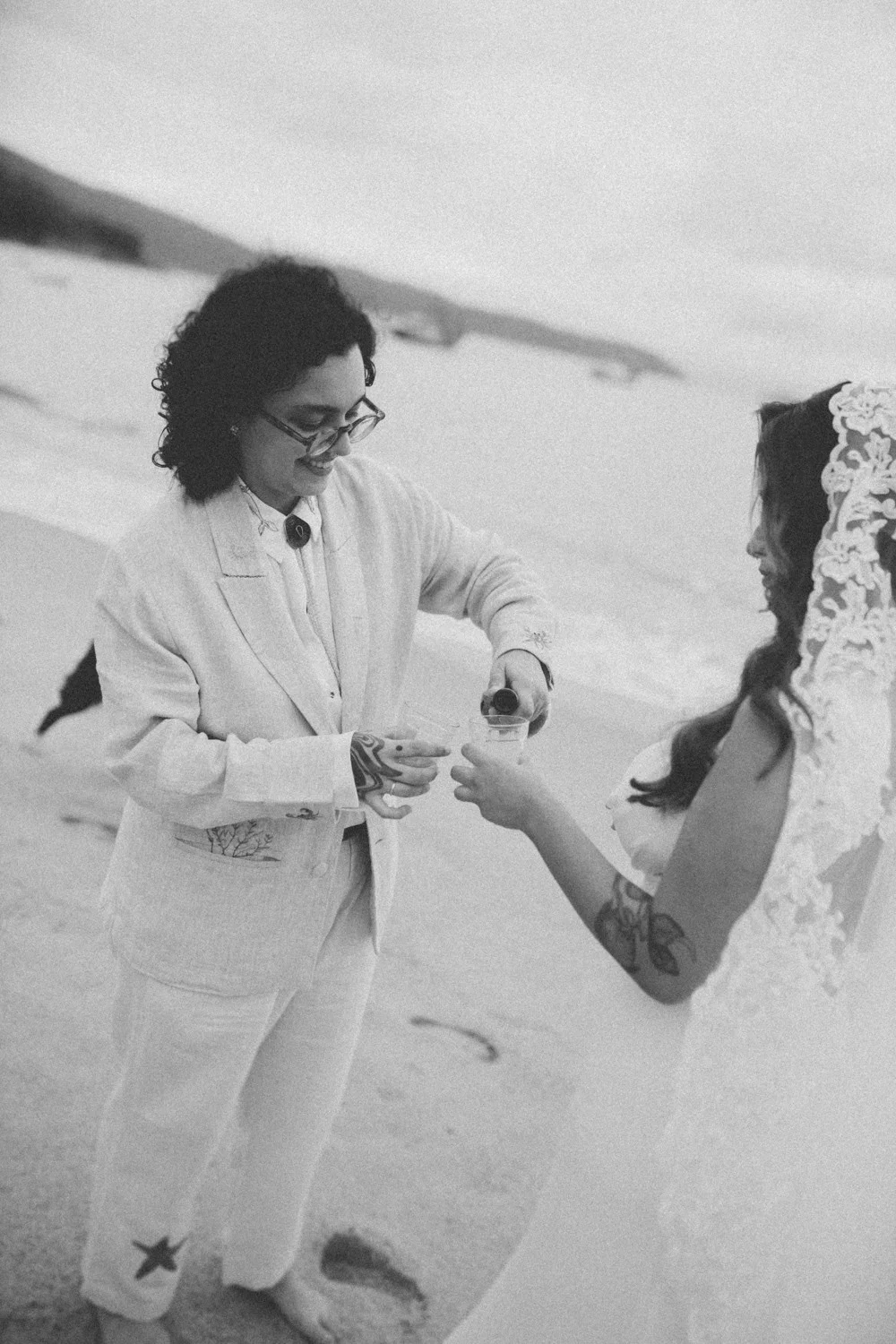
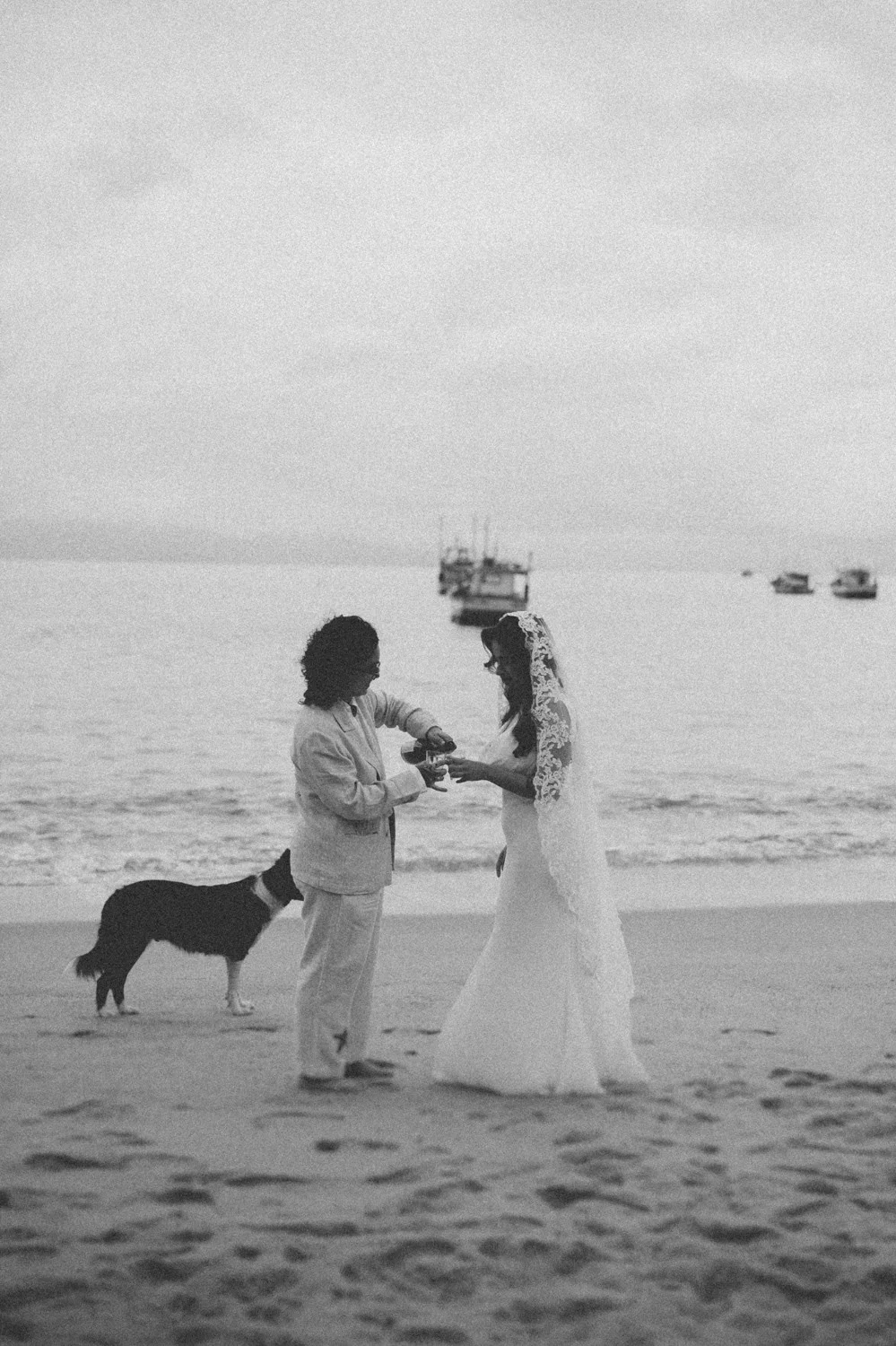
Rafaela and Nathalia’s advice to other LGBTQ+ couples planning a wedding distills everything their own day demonstrated. “Create a wedding that feels true to your life, not to expectations,” says Sant’Ana. “Choose a place and a format that genuinely represents who you are as a couple. When you focus on meaning instead of performance, everything becomes more natural, more emotional and more unforgettable.”
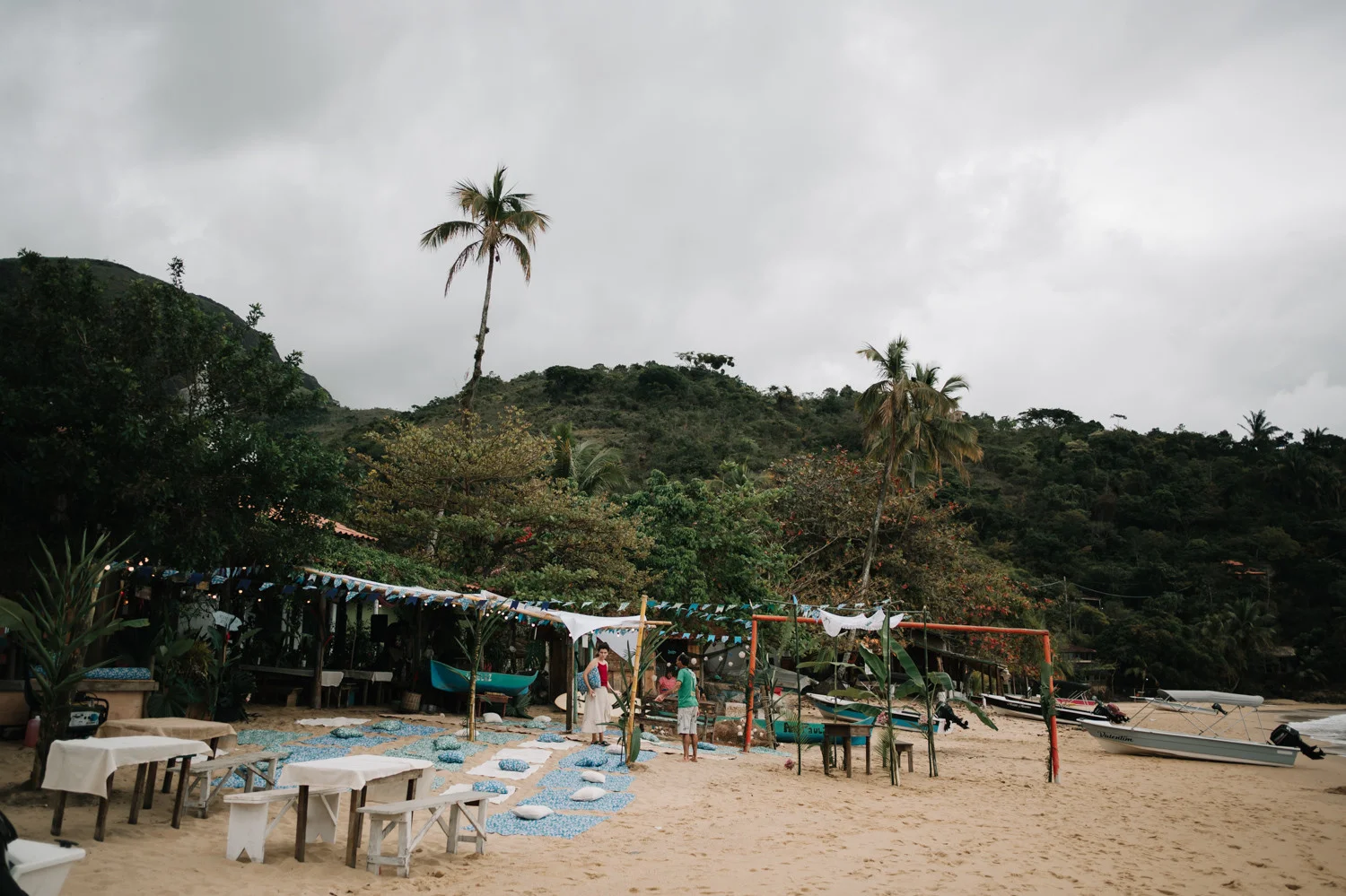
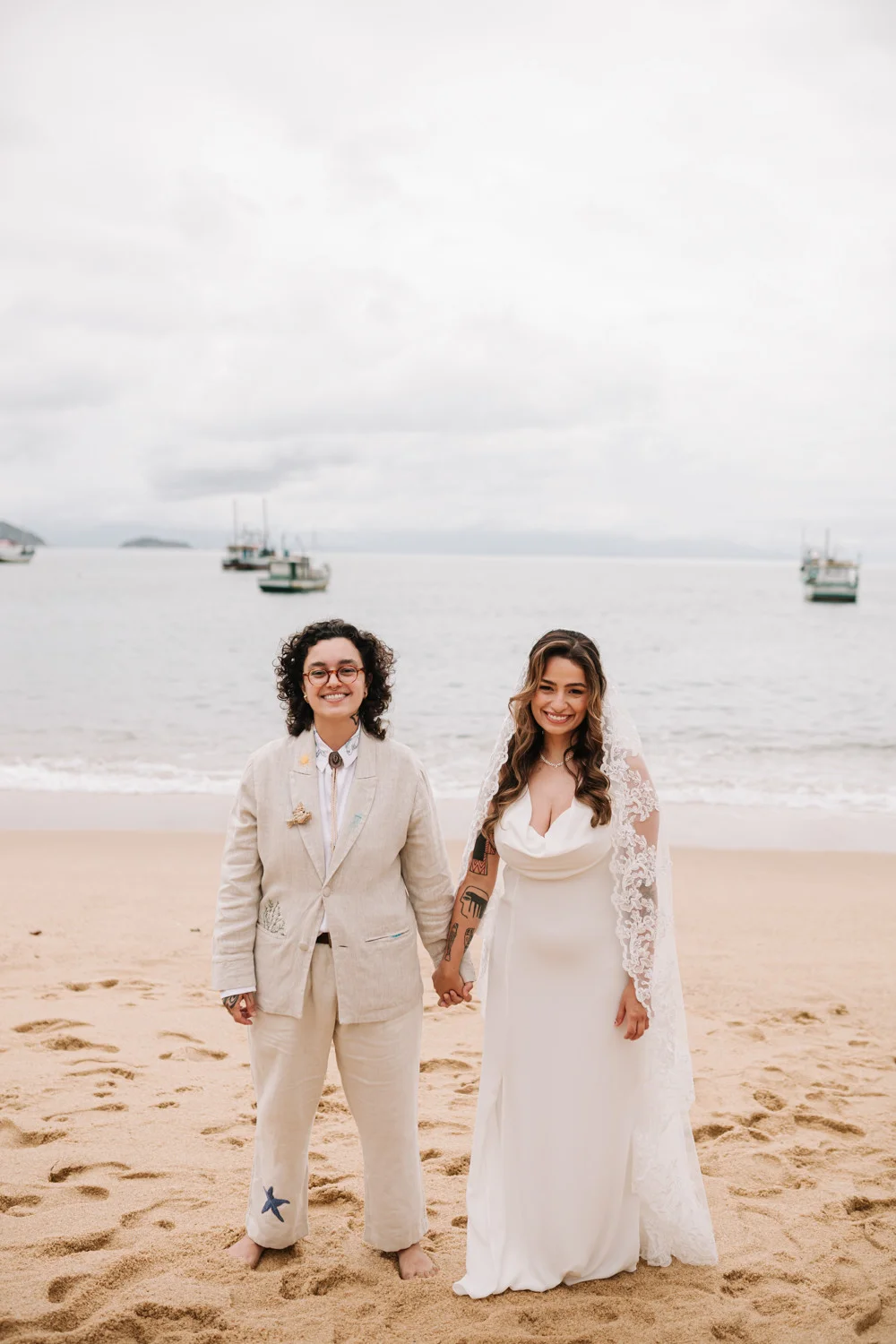
For this couple, meaning looked like a boat ride to a community that fed them real food. It looked like a palette borrowed from the forest and the sea. It looked like two months of forró lessons so that one dance, on one afternoon in September, would feel like them.
The Photographs
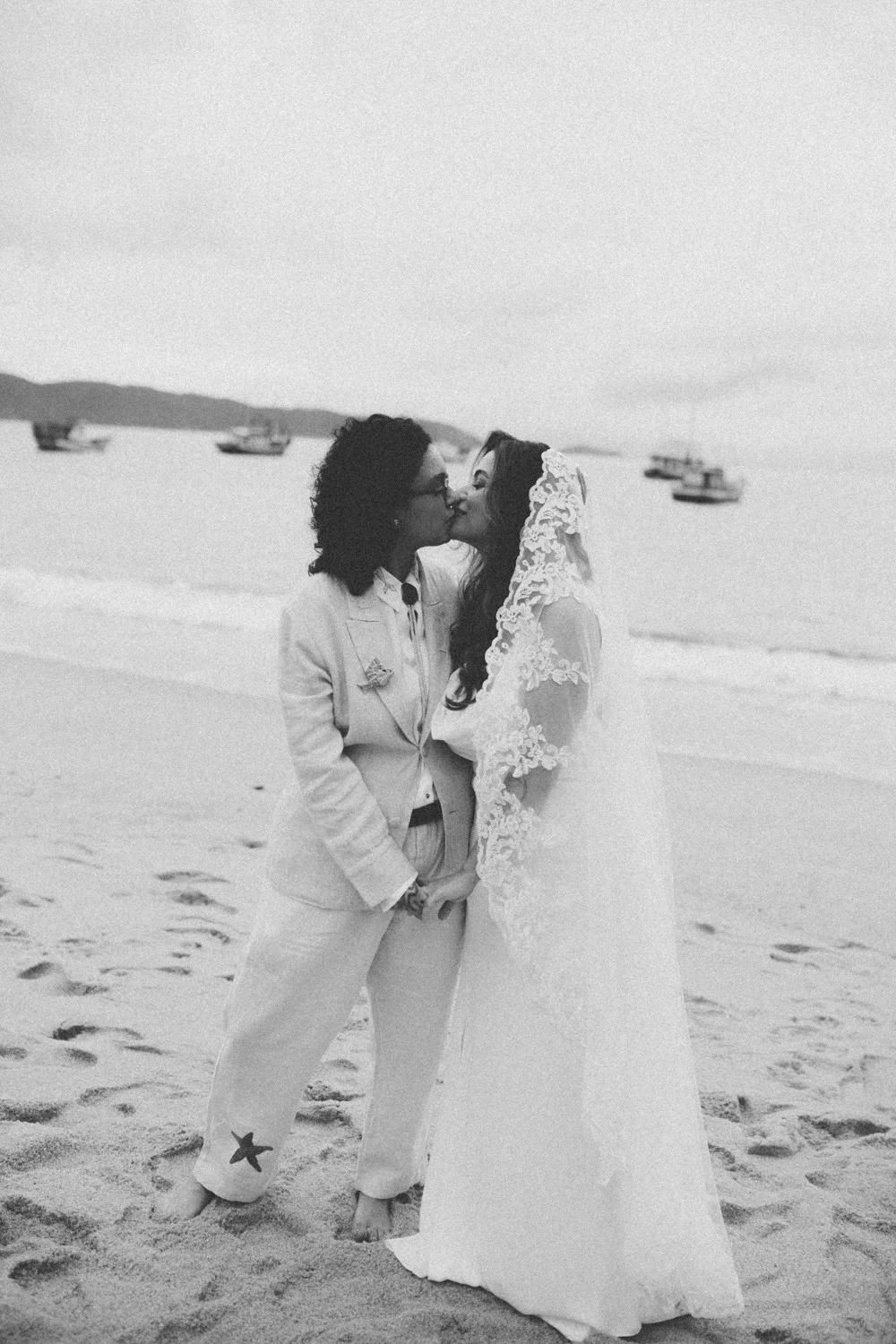
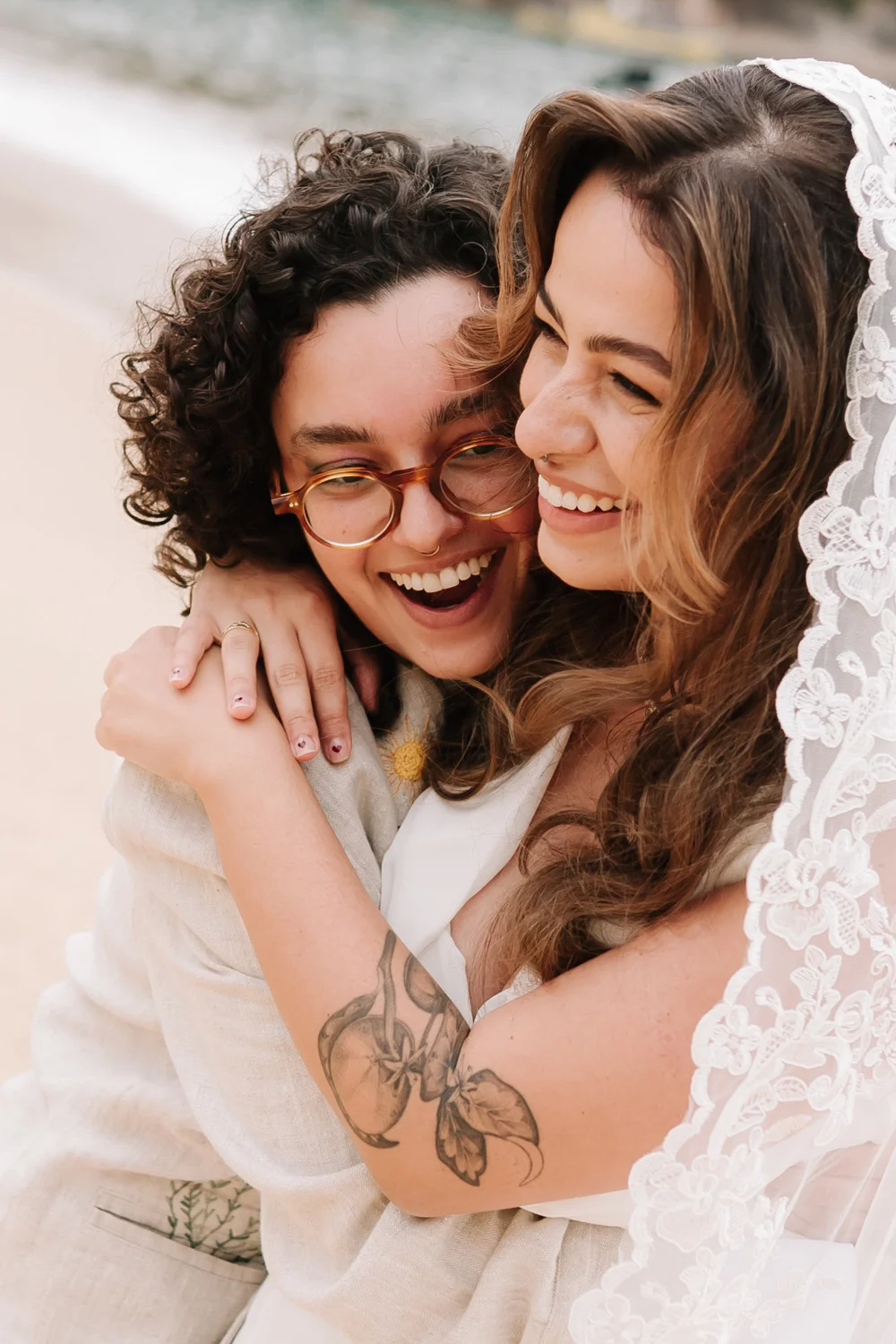
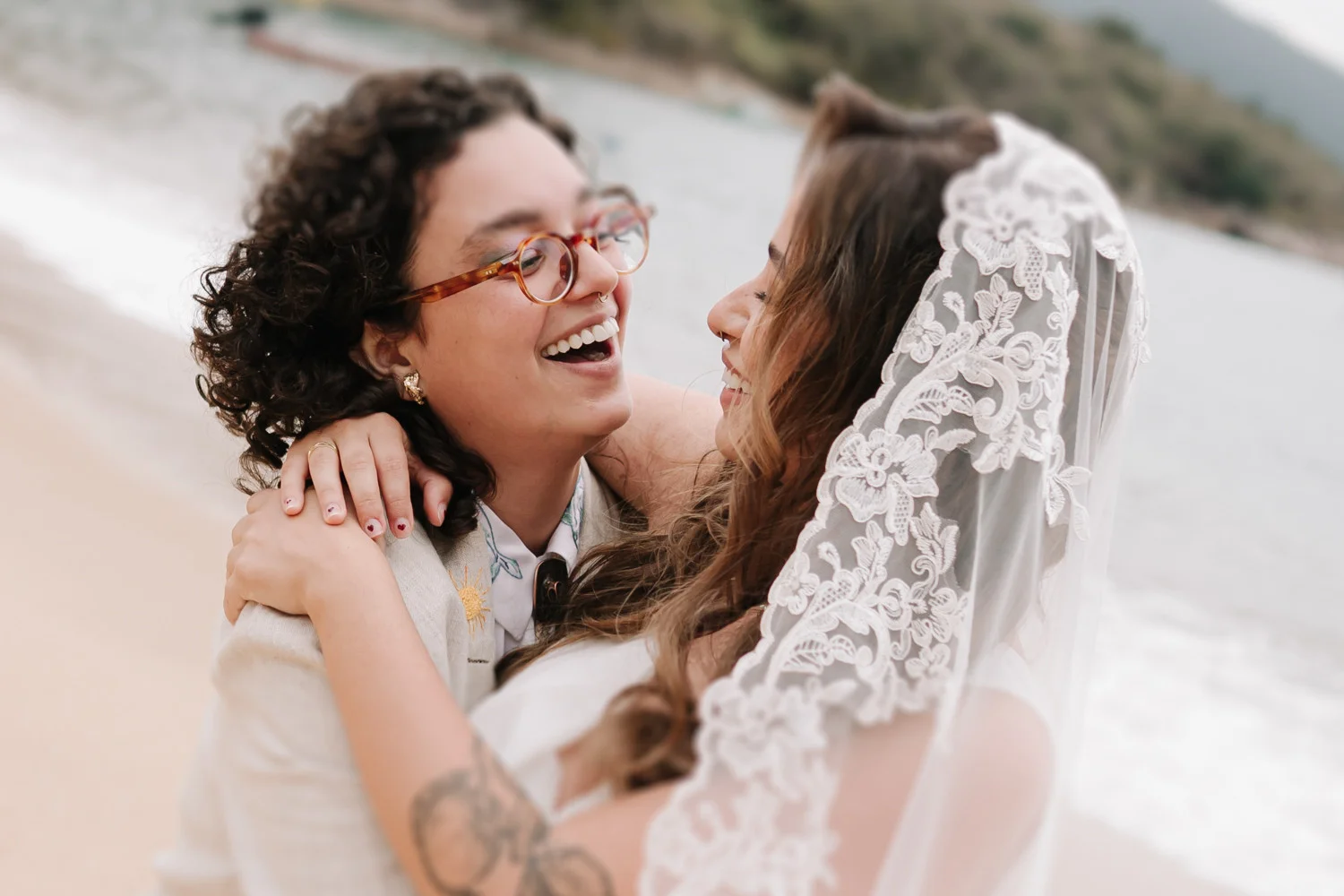
Alma Afetiva, the São Paulo–based photography studio whose name translates loosely to “affectionate soul,” documented the day from the first private morning hours through the forró. Their approach, attentive and unhurried, suited a celebration where the surrounding landscape was always present and where the most significant moments were often quiet ones: a boat crossing water, two people seeing each other for the first time all day, the community gathering to share a meal.
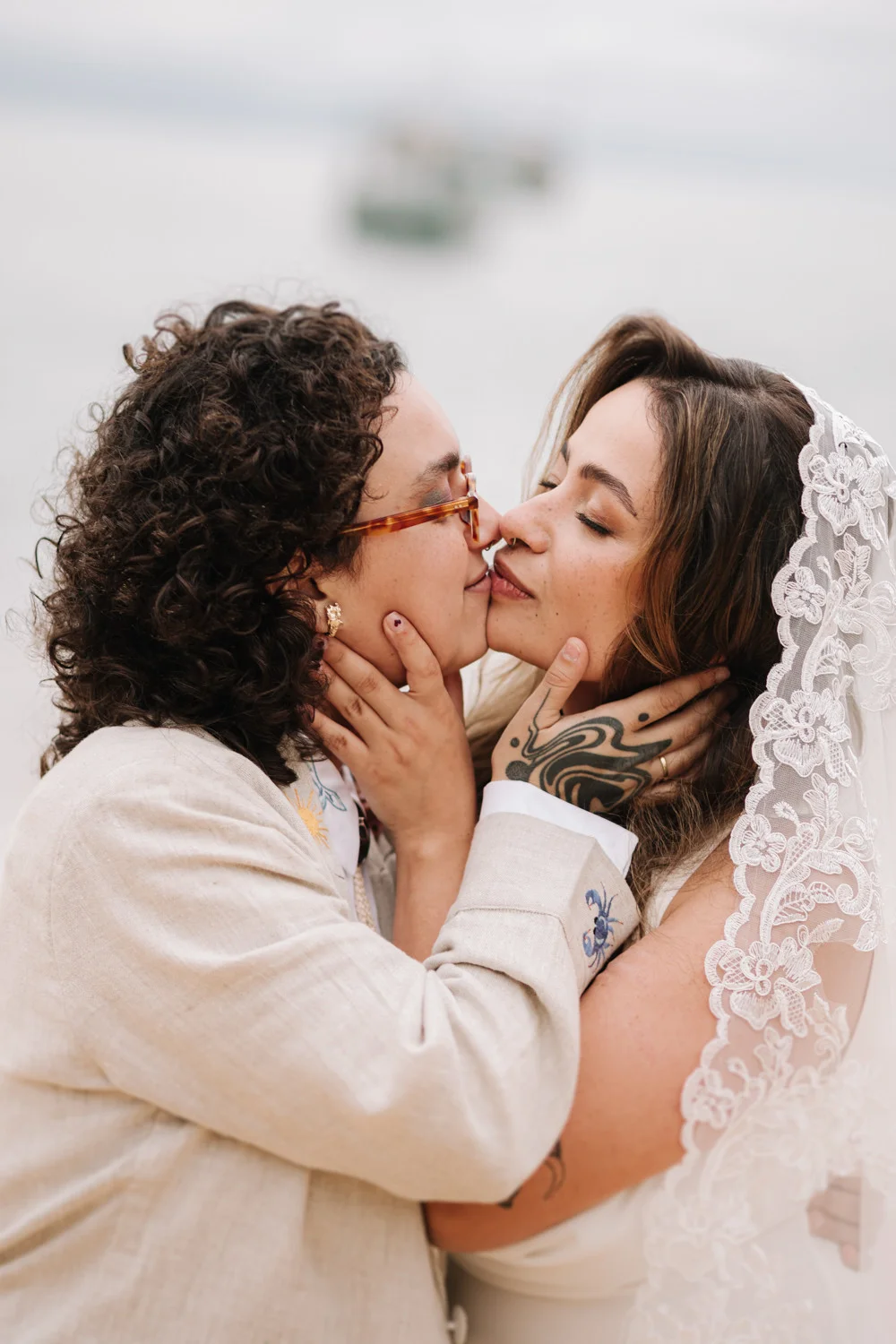
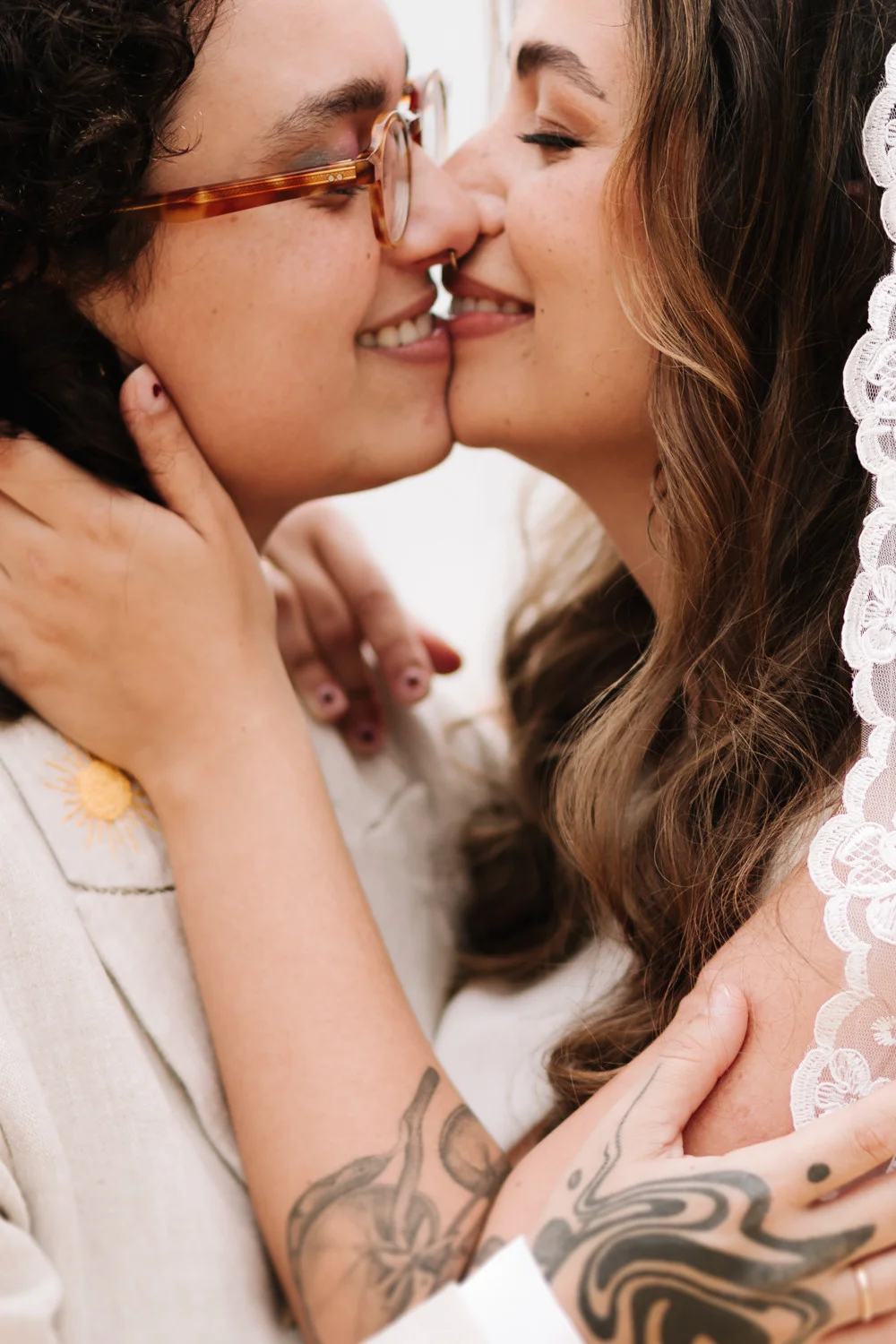
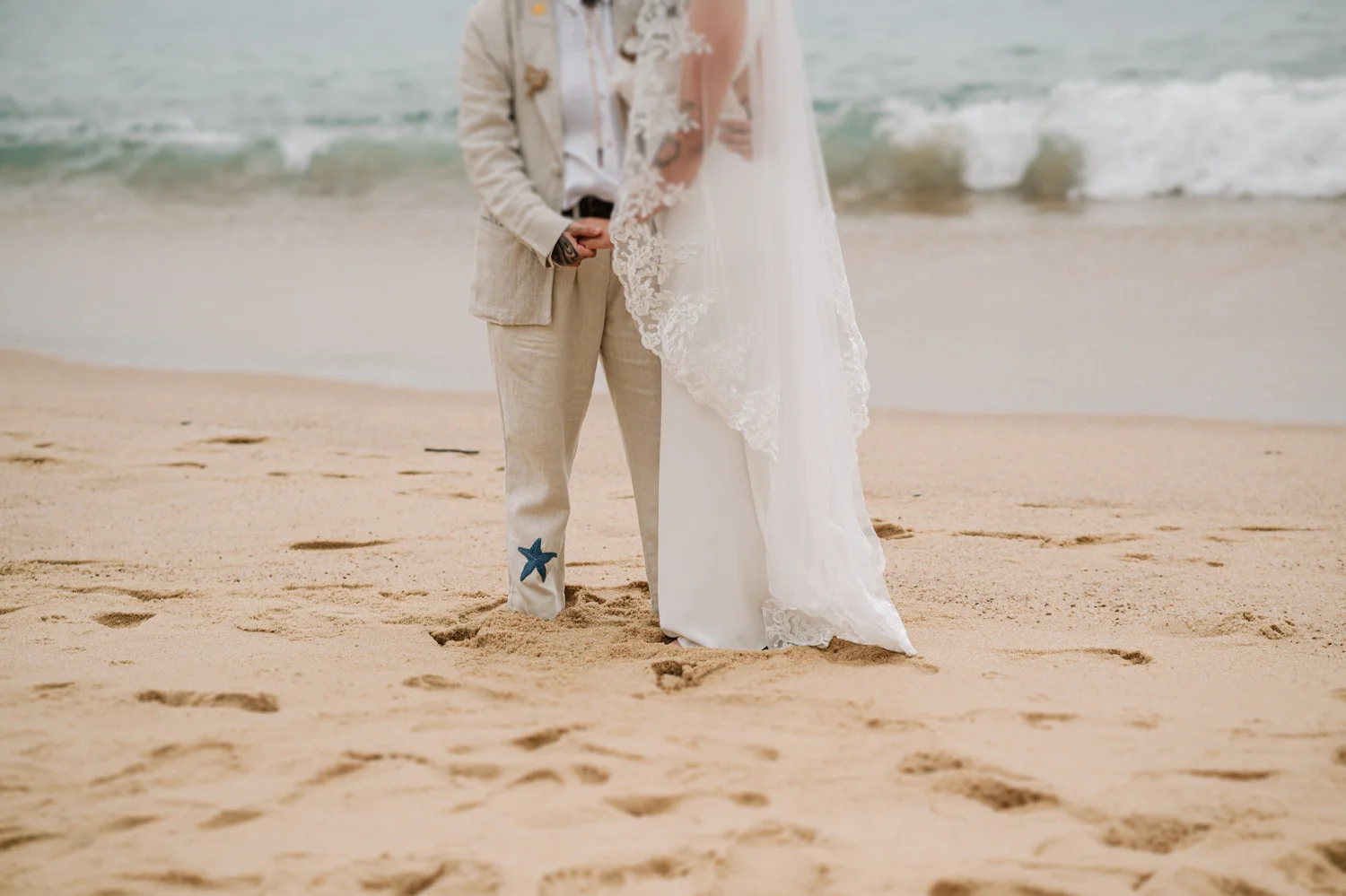
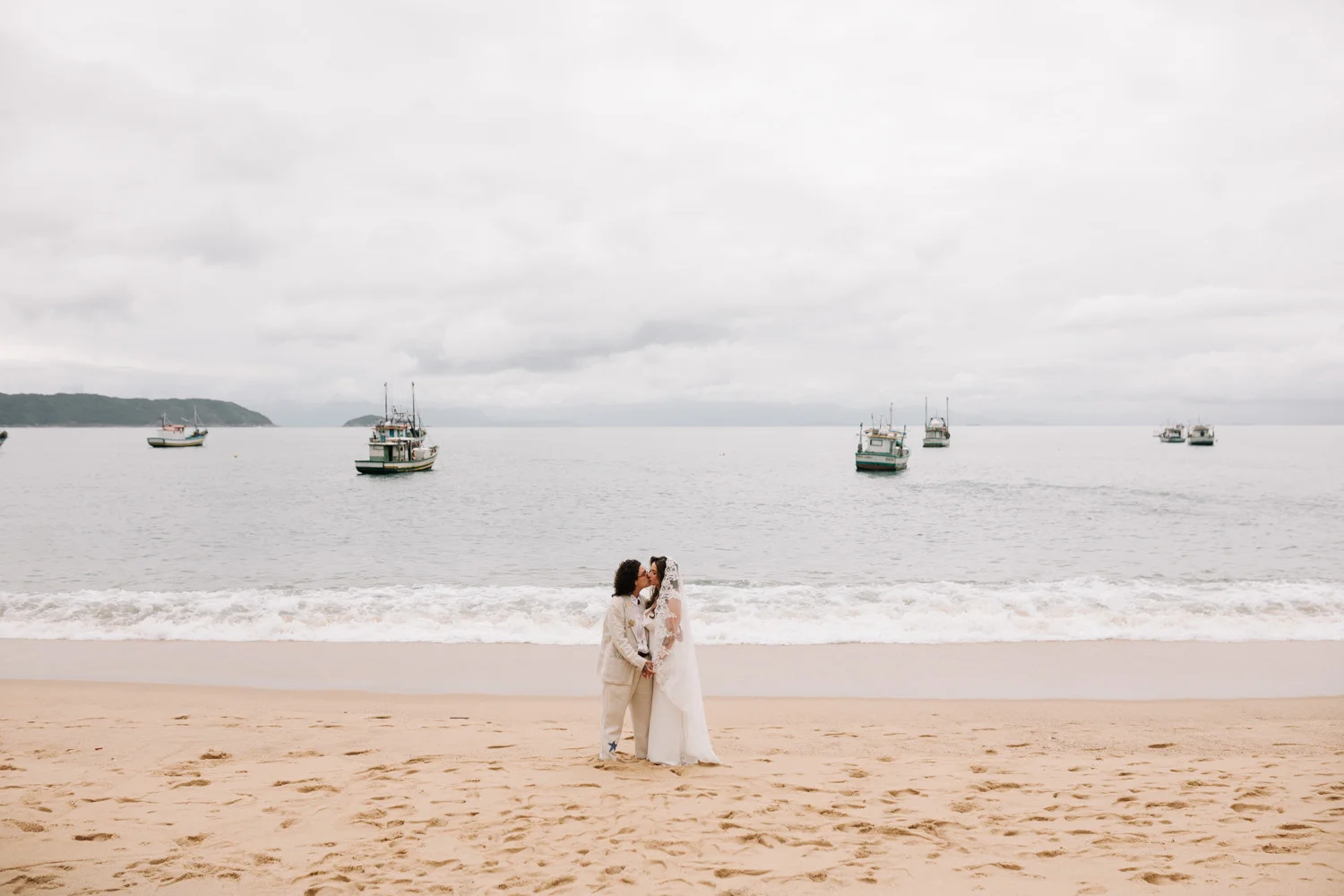
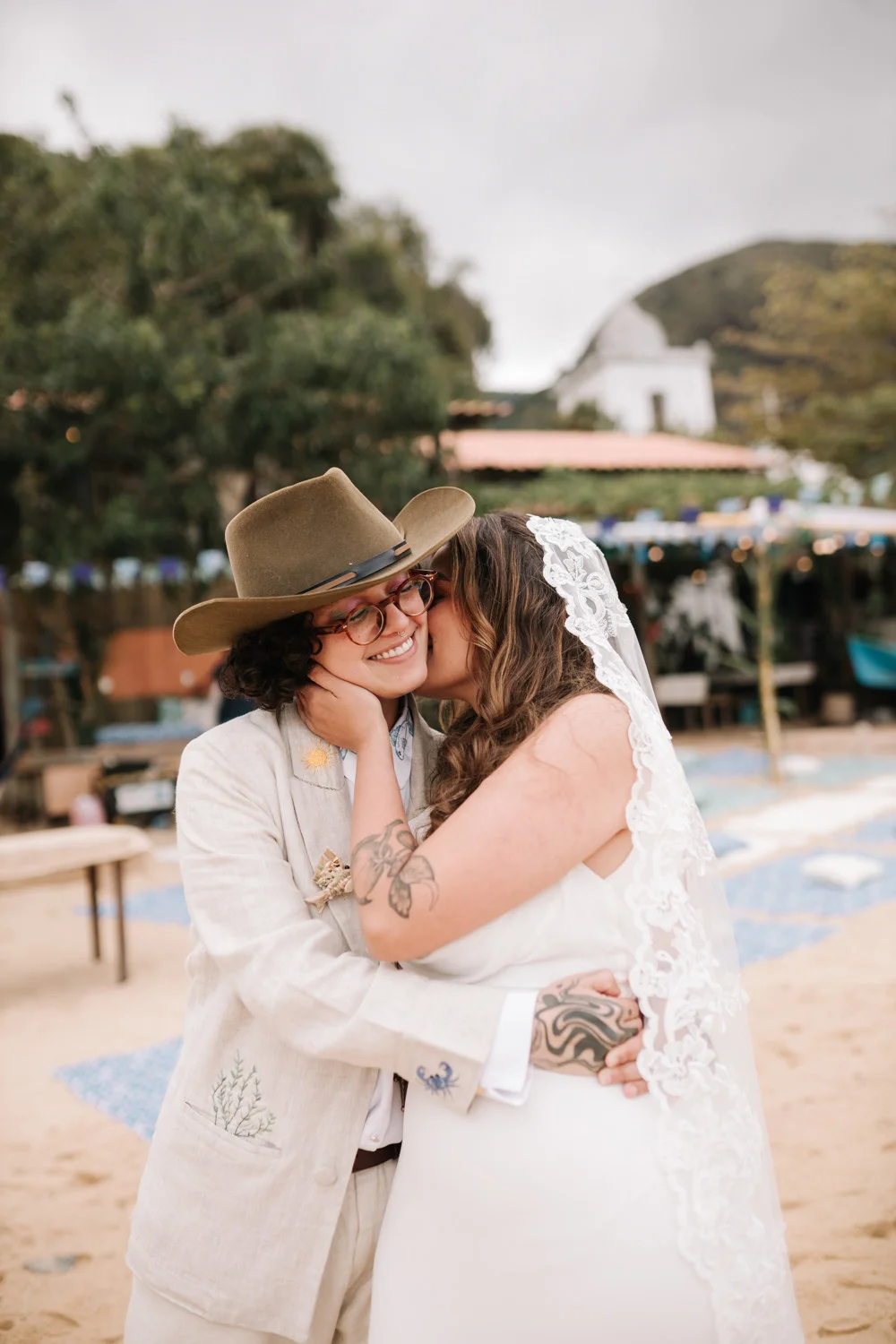
“It was a reminder that—when surrounded by the right people and spaces—love can be celebrated with ease, authenticity and a true sense of belonging,” says Sant’Ana. ❤️
FEATURED LGBTQ+ INCLUSIVE AND QUEER AFFIRMING WEDDING VENDORS
Photographer: Alma Afetiva
Wedding Ceremony and Reception Venue: Pouso das Flores
Filed under
RafaelaNathaliaParaty weddingRio de Janeiro weddingBrazil LGBTQ+ weddingcaiçara community weddingPouso das FloresAtlantic Forest weddingboat ceremonyforró first danceLGBTQ+ wedding Brazilnon-binary weddingpansexual couplequeer wedding BrazilAlma Afetivacoastal wedding Brazilintimate destination weddingearthy wedding paletteorganic floralsBrazilian cultural weddingbroom wedding titlebride and broomgender-inclusive wedding